

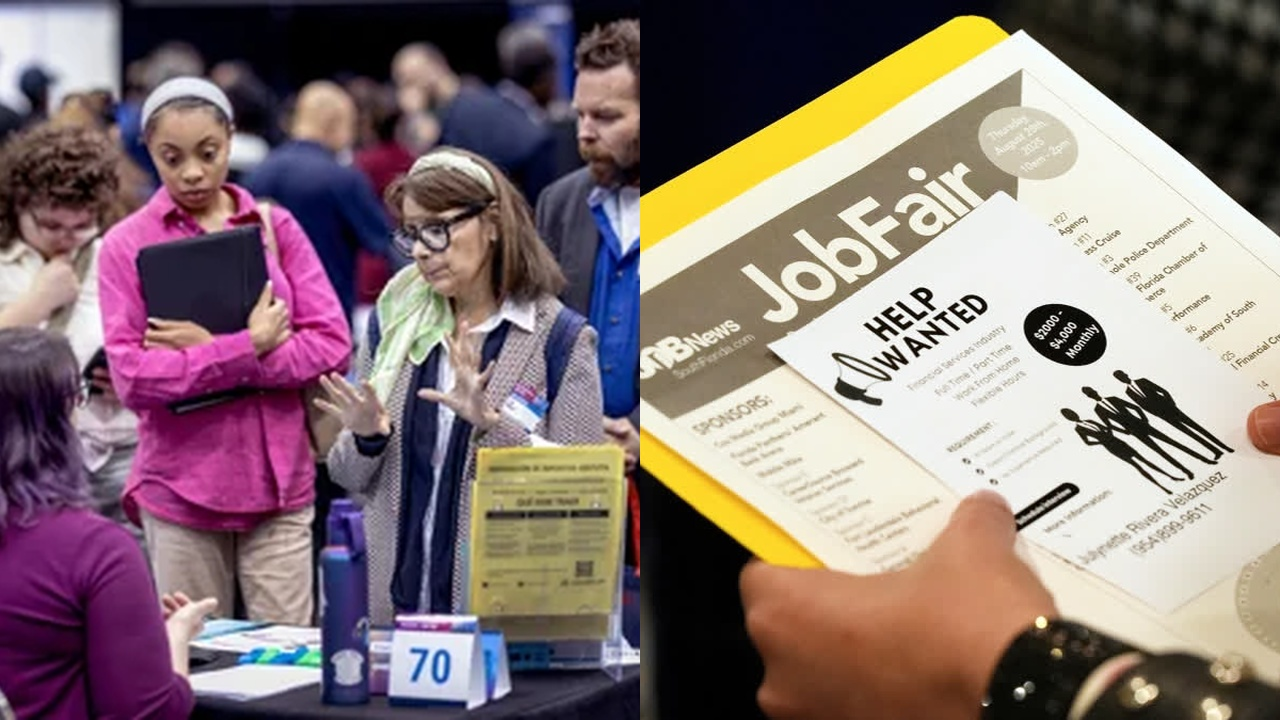
US Economy Unexpectedly Loses 23,000 Jobs – U.S. labour market suffers surprise blow in July Employers slashed 23,000 jobs instead of adding workers. The fall was the first monthly drop in payrolls in five months and was well below economists’ expectations for ongoing job growth. New data has set off fresh concerns that the momentum of hiring is slowing throughout the American economy.
July’s report also found earlier job gains were much weaker than initially reported. May and June job growth was revised down by a combined 103,000 jobs, presenting a far softer picture of the overall labour market than previous government estimates had indicated.
Job Cuts Fail to Halt Unemployment Rate’s Decline
Payrolls fell but the unemployment rate fell unexpectedly to 4.1% from 4.2%. But this improvement did not necessarily mean better working conditions.
Some of the decline was due to fewer people entering the labour market. The labor-force participation rate fell to 61.4%, the lowest in about five and a half years. Some 264,000 people dropped out of the labour force during the month, meaning they no longer were counted as actively seeking work.
Economists are interested in this development because a falling unemployment rate can sometimes mask underlying weakness when fewer people are looking for work.
Private-Sector Hiring Edges Up
The weakness was concentrated mostly in government employment and a few service industries, while private payrolls expanded by about 30,000 jobs. Healthcare, construction and manufacturing posted small gains during the month.
Manufacturing employment experienced a slight improvement as companies kept investing in areas related to cutting-edge technology and artificial intelligence infrastructure. However, employment fell in retail, finance and leisure related industries.
The mixed picture indicates that the U.S. labour market has not fallen off a cliff but is becoming more bifurcated, with some sectors still hiring and others pulling back.
Wage Growth Slows Down Even More
Another key element of the July jobs report was a slower increase in wages. Average hourly earnings were up 3.2% from a year ago, after rising 3.4% in June.
While slower pay gains could help ease inflationary pressure, they can also be a sign that employers are becoming more cautious about compensation and hiring. The weakness in payrolls, downward revisions and slowing wage growth have added to uncertainty over the path of the US economy in the second half of 2026.
Weak Jobs Report Changes Fed Rate Projections
The weak jobs figures hit financial markets and expectations for Federal Reserve policy straight away. Investors trimmed back their expectations of another rate hike in September after data showing a weak labour market.
Treasury yields fell and the dollar weakened as traders re-evaluated the prospects of more monetary tightening. The latest report gives the Federal Reserve more room to wait for additional inflation and employment data before deciding whether another rate increase is necessary, some economists said.
The labour market remains quite stable by historical standards, but the latest data show hiring momentum has slowed sharply and policymakers face a more complicated economic outlook.
Source
- Reuters – U.S. jobs report for July, payrolls decline and Fed rate outlook
- AP – July Jobs Drop, Unemployment Report & Payroll Revisions.
- U.S. Bureau of Labour Statistics (BLS) – Official July 2026 Employment Situation Summary and labour market data.
- Reuters – Markets U.S. jobs data implications for Treasury yields, dollar moves.