

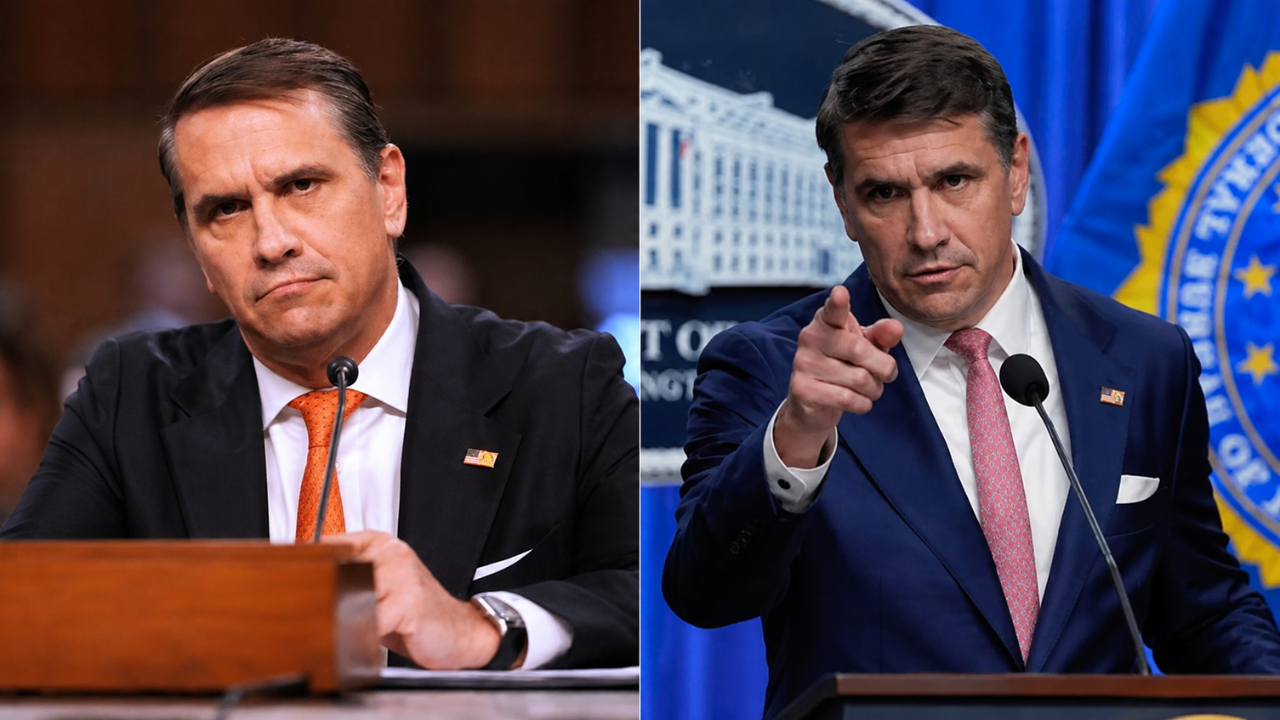
Todd Blanche’s appointment to a senior Justice Department post has sparked debate in Washington, with critics saying it represents a level of political proximity that would have been extraordinary in the Watergate era. Blanche, a former defence lawyer for Donald Trump, has become a central figure in discussions of presidential power, legal representation and the independence of the Justice Department.
Todd Blanche Confirmation Attracts National Attention
The confirmation has sparked interest because Blanche was one of Trump’s most prominent defence lawyers in the past. His transition from private legal defence to a senior federal law enforcement role has raised questions about the appropriate role of personal legal loyalty in government power.
Backers say presidents have wide latitude in selecting highly qualified lawyers for top jobs at the Justice Department, especially when nominees have considerable trial experience and expertise in criminal law.
Critics assail Justice Department independence
Critics are paying less attention to Blanche’s legal qualifications and more to worries about institutional independence.
The Justice Department has long been a tricky balancing act. It is part of the executive branch and ultimately reports to the president, but is also expected to make prosecutorial decisions based on law and facts rather than personal or partisan interests.
That tension is more politically sensitive if a senior official was a former personal representative of the president.
Watergate Comparison Brings 1973 Back into Conversation
Critics have pointed to 1973 because the Watergate scandal was one of the defining tests of Justice Department independence in modern U.S. history.
During the Nixon years, the firing of special prosecutor Archibald Cox by President Richard Nixon was the touchstone of a serious constitutional and political crisis, the “Saturday Night Massacre.” Instead, Attorney General Elliot Richardson and his deputy, William Ruckelshaus, resigned rather than carry it out.
The episode remains a touchstone in Washington conversations about presidential influence over law enforcement at the federal level.
Supporters Say Historical Comparisons Can Be Overstated
Blanche’s supporters could argue that the Watergate references are overdone.
They can also note that even today’s confirmation processes, ethics rules, congressional oversight, inspectors general, courts and internal Justice Department processes continue to place limits on the exercise of authority by individual officials.
They also contend that existing legal representation does not automatically preclude an attorney from subsequently serving in government, if conflicts of interest are appropriately managed.
Ethics, Recusal Questions Could Stay Important
One pragmatic question is whether Blanche could encounter problems stemming from his past legal work.
Federal ethics rules can require officials to recuse themselves from certain matters involving former clients or financial interests. When an official transitions from private practice to a government job, recusal decisions can come into play.
Any particular limits on Blanche would be dictated by formal ethics agreements, rules of the Justice Department and the specifics of individual cases.
Senate approval process lends political weight
The usual questions for senior nominees to the Justice Department focus on their legal experience, political independence, executive power, and how they would deal with conflicts involving the White House.
The hearings often serve as a forum in which senators of both parties test whether nominees would resist improper political pressure. In a very polarised environment those hearings can also turn into larger debates about the limits of presidential power.
Sources
- U.S. Senate – Official records of confirmations, nominations and roll-call information
- U.S. Department of Justice – Official information about leadership, ethics rules, institutional responsibilities
- U.S. Senate Historical Office – Watergate and the 1973 constitutional crisis: historical materials.
- National Archives – Watergate records, Nixon administration documentation
- Congressional Research Service – Independent analysis of Justice Department independence, executive power.