

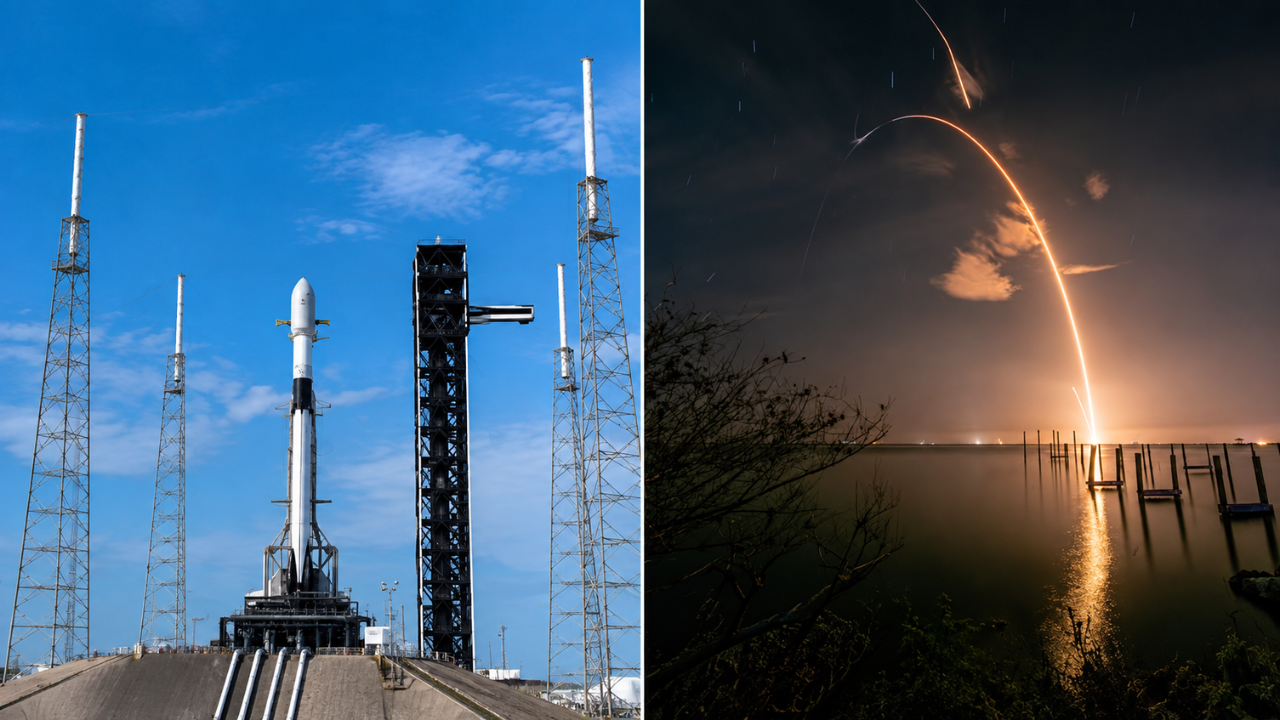
SpaceX launched a mission to replenish Globalstar satellites from Cape Canaveral cementing its reputation as one of the busiest commercial launch providers in the world. The mission is designed to support Globalstar’s satellite network with replacement spacecraft to help ensure coverage, reliable communications and long-term service capacity. The launch highlights the growing importance of satellite systems in low-Earth orbit as the demand for mobile connectivity, emergency messaging, asset tracking and other satellite-enabled services continues to rise.
SpaceX Rocket to Send Globalstar Satellites into Space
The mission, reports said, lifted off on a Falcon 9 rocket, SpaceX’s workhorse launch vehicle, out of Cape Canaveral.
As one of the most popular rockets in the commercial spaceflight industry, Falcon 9 is designed to be partially reusable. The first stage can be recovered and reused. This saves SpaceX money and increases the rate of missions.
That reliability, and launch cadence, makes Falcon 9 an important option for satellite operators such as Globalstar on replenishment missions.
Globalstar must launch satellites to maintain coverage
You have to keep satellite constellations up for a period of time.
Spacecraft in low-earth orbit experience radiation and temperature variations, as well as long term hardware wear. But even the best-designed satellites will eventually become inefficient or die of old age.
Replenishment launches enable companies to replace ageing spacecraft before gaps in coverage become a serious problem.
Globalstar must have a sufficient number of active satellites to provide reliable system service.
Globalstar – Satellite Communications and Tracking
Globalstar provides satellite services to users and businesses beyond the reach of conventional cellular.
The network will support communications, emergency messaging, location tracking and other applications that rely on access to satellites rather than local mobile towers.
This makes the system useful in remote areas, in oceans, and in places where terrestrial infrastructure is not available or reliable.
The new satellites that are being put into orbit may help to improve the continuity of the network and its capacity in the future.
Cape Canaveral remains a US launch hub
Space Force Station Cape Canaveral Still Vital to U.S. Spaceflight
Florida’s east coast location means rockets can fly over the Atlantic Ocean, but also get a little extra velocity from the Earth’s rotation.
That makes the site one of the busiest spaceports in the U.S. supporting national security, commercial and scientific missions.
SpaceX routinely launches Falcon 9 missions from Cape Canaveral with a variety of payloads.
Falcon 9 Reusability Boosts Launch Rate
The Falcon 9’s best feature is its re-usable first stage.
Most traditional rockets discard most of their hardware after one flight, but SpaceX has built its business model around recovering and reusing big chunks of hardware.
That means the company can launch more often and lower the manufacturing requirements for each mission.
This could mean lower launch costs for customers, and more flexible scheduling.
Mission Beyond Launch Success
But the rocket launch is only the first part of the mission.
Once in orbit the satellites have to set up communications, power up their systems, deploy their solar panels and move to their planned operating positions.
Then the engineers test the spacecraft before putting them into the real network.This is an important step in the commissioning process to determine if the new satellites are ready to serve customers.
Globalstar Refuelling to Support Long-Term Network Plans
SpaceX said the launch is another step in Globalstar’s ongoing plan to maintain and improve its satellite constellation.
The need for reliable orbital infrastructure will become even more important as the demand for direct satellite connectivity grows.
If the new spacecraft pass the tests they could help shore up existing services and position Globalstar for future growth.
Sources
- SpaceX – Falcon 9 launch news and official mission data
- Cape Canaveral Space Force Station – Launch Site & Mission Details
- Federal Communications Commission – Regulation and Licensing of Satellite Communications
- SpaceNews – Reporting on the business and politics of spaceflight