

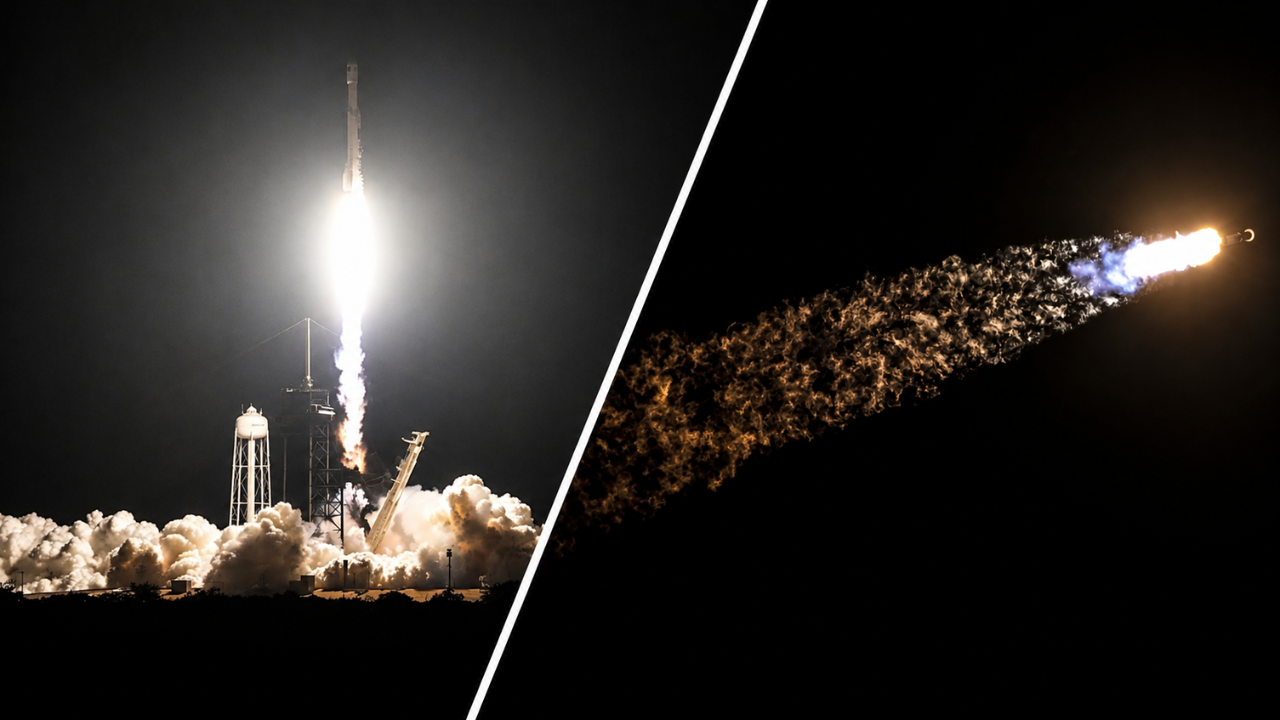
NASA and SpaceX are investigating new techniques for avoiding collisions between spacecraft, rocket stages and other mission hardware on future lunar missions, sources say. The move comes as an expectation for a surge in the number of government and commercial vehicles travelling between Earth and the Moon.
The reported study on preventing a collision with the moon is about safer mission planning, better tracking and communication, and controlled disposal of used rocket stages. As a number of organisations gear up to send landers, orbiters, cargo vehicles and crewed spacecraft to the Moon, these measures could prove crucial.
Lunar traffic will likely increase
Future moon missions will be much more complex than a single spacecraft going to a single place.
These regions could be home to NASA’s Artemis programme, commercial lunar deliveries, international science missions, communications satellites, and private landers. Some missions could also include multiple launches, orbital refuelling, docking and spacecraft transfers.
With more traffic, mission planners will want to get a better handle on the movement of all the active and inactive objects.
Better tracking improves safety
Better tracking will probably be one of the most important parts of the study.
Using ground-based radar and telescopes, navigation instruments on board and data from mission control, you can figure out where an object is and where it will go. Operators could spot close approaches earlier and devise corrective actions if more accurate data were available.
Tracking objects near the Moon is more difficult than tracking satellites in low Earth orbit because the distance is greater and the gravitational environment is more complicated.
NASA, SpaceX May Share More Data
“Collaboration between NASA, SpaceX and other mission operators could help reduce collision risks.”
Companies might be required to submit schedules for launches, planned trajectories, details of stage separation and plans for disposal. Mutual understanding of predictions between different organisations would be facilitated by standard data formats.
One operator may not know that another vehicle is crossing the same region without coordination.
A Possible Solution: Disposal with Controls
Mission designers can leave fuel for an upper stage to perform a final disposal manoeuvre.
The stage could be aimed at a chosen lunar impact site, moved into a safer orbit or on an escape trajectory away from critical operational regions. There are pluses and minuses to each choice.
Fuel stored for disposal adds weight and can limit the amount of cargo or scientific equipment a rocket can deliver.
Automation could avoid near misses
Autonomous collision-detection technology may be used for future spacecraft and stages.
Onboard systems could compare the vehicle’s path with nearby objects and suggest or execute a slight course correction. Automation would be useful when communication delays make it difficult to make immediate decisions.
However, such systems must be very reliable. An error in the manoeuvre could place the vehicle on a more dangerous trajectory.
Sources
- NASA – Artemis planning, lunar mission safety and spacecraft navigation information.
- SpaceX – Starship development, lunar lander architecture and launch-system updates.
- NASA Office of Inspector General – Independent assessments of Artemis risks and mission management
- US Space Command – advice on tracking space objects and collision warnings.
- European Space Agency – Space traffic management and orbital debris research.