
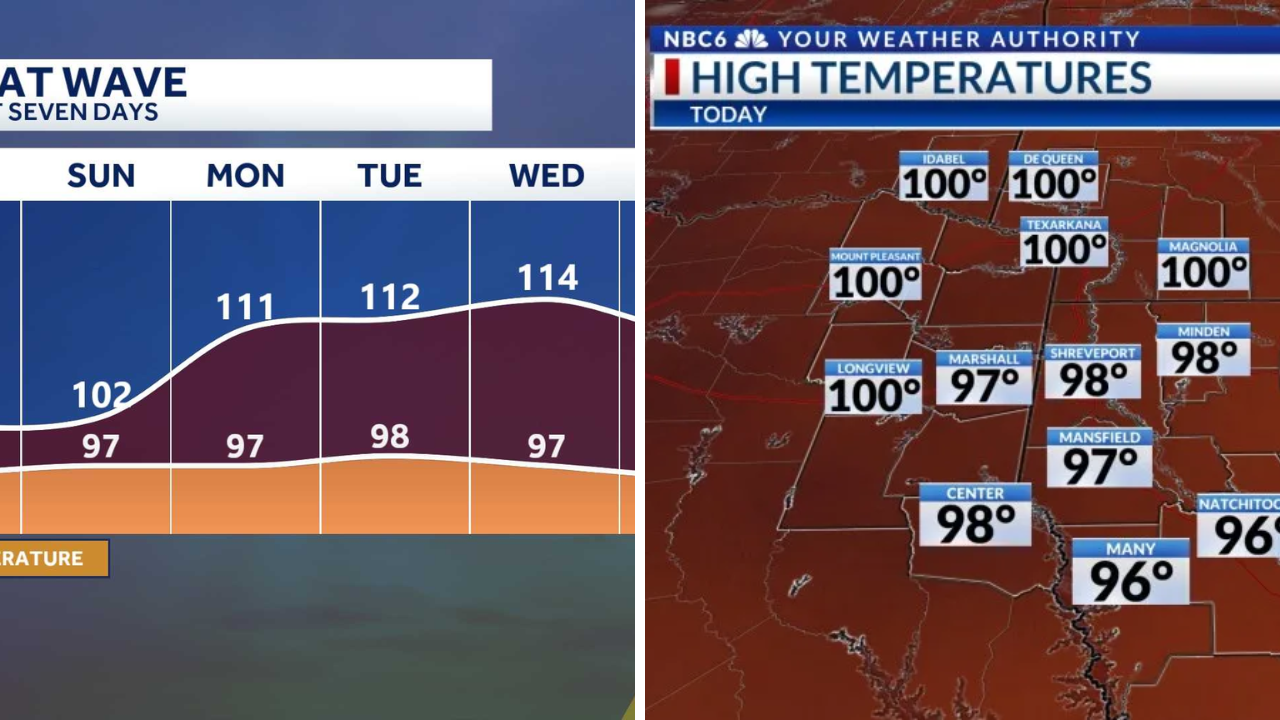
Parts of Louisiana are under an Extreme Heat Warning today, with humidity making the heat index climb as high as 115°F. The heat, with little overnight relief and high humidity, could bring dangerous conditions for residents, outdoor workers, children, older adults and those who don’t have access to reliable air conditioning.
In Louisiana, an extreme heat warning means heat-related illnesses can develop rapidly, particularly during the height of the afternoon heat. People are being advised to stay indoors as much as possible, drink lots of water and reduce outdoor activity.
Heat index may hit 115 degrees
The heat index is an estimate of how hot it feels when relative humidity is taken into account with the actual air temperature.
Louisiana is so humid that your body can’t evaporate sweat efficiently, making it harder to cool down. If the actual temperature is below 100° F., you may feel significantly hotter.
A heat index of roughly 115°F puts people in danger of heat cramps or heat exhaustion. And in direct sunlight, things can get especially dangerous, with the apparent temperature feeling even hotter.
The greatest risk is in the afternoon hours
Mostly late morning through early evening. Conditions expected to be dangerous.
Those who work outdoors—construction workers, landscapers, farm workers, delivery drivers and others—are also more exposed. Employers should offer frequent water breaks, shaded areas and cooling opportunities.
People who want to exercise outdoors should either reschedule their activities to the early morning or wait until the warning passes. Light-weight clothing and hydration may help, but they do not eliminate the threat of extreme heat.
Heat Illness Can Strike Quickly
Heat exhaustion can lead to heavy sweating, weakness, dizziness, headache, nausea or muscle cramping.
“Anyone showing these symptoms should be moved to a cooler place, given water if appropriate and closely monitored.” Heat stroke is a medical emergency that can cause confusion, fainting, seizures, very high body temperature or hot skin.
Call for emergency medical treatment if you think heat stroke has occurred. Without treatment, it can lead to death or organ damage.
Elderly and children require special care
Extended periods of heat pose greater risks to older adults, infants, young children, pregnant people and people with heart or respiratory conditions.
Check on neighbours and relatives who live alone or who do not have sufficient air conditioning. Fans may provide some comfort, but they don’t help enough when indoor temperatures are dangerously high.
If you do not have air conditioning, find relief in public cooling centres, libraries, community buildings or other approved locations.
Vehicles Can Be Deadly in Minutes
Never leave children or pets unattended in parked vehicles, even for a minute.
Deadly heat levels can be reached inside a locked car in minutes. Leaving windows open a little bit is not enough protection.
It’s worth taking a good look in the back of the car before locking it up.” Give pets a cool, shady place with air circulation and plenty of fresh water, or keep them inside.
Storms Offer Only Temporary Relief
Scattered summer thunderstorms may develop in some areas, but any cooling will be short lived.
Gusty winds and locally heavy rain and lightning may also accompany storms. After rain humidity is often high so uncomfortable conditions can return quickly.
Don’t think that clouds or a passing shower have taken the heat danger away. Be on the lookout for local alerts throughout the day.
Sources
- National Weather Service – Heat Advisories, Forecasts, and Safety Information
- National Weather Service New Orleans/Baton Rouge – Regional forecasts and warnings for south-east Louisiana.
- National Weather Service Lake Charles – Watches, warnings and forecasts for south western Louisiana.
- Louisiana Governor’s Office of Homeland Security – State emergency information and public safety advisories.
- Centres for Disease Control and Prevention – Heat-Related Illness and How to Prevent It
- Ready.gov – Federal resources on emergency safety and preparedness for extreme heat