
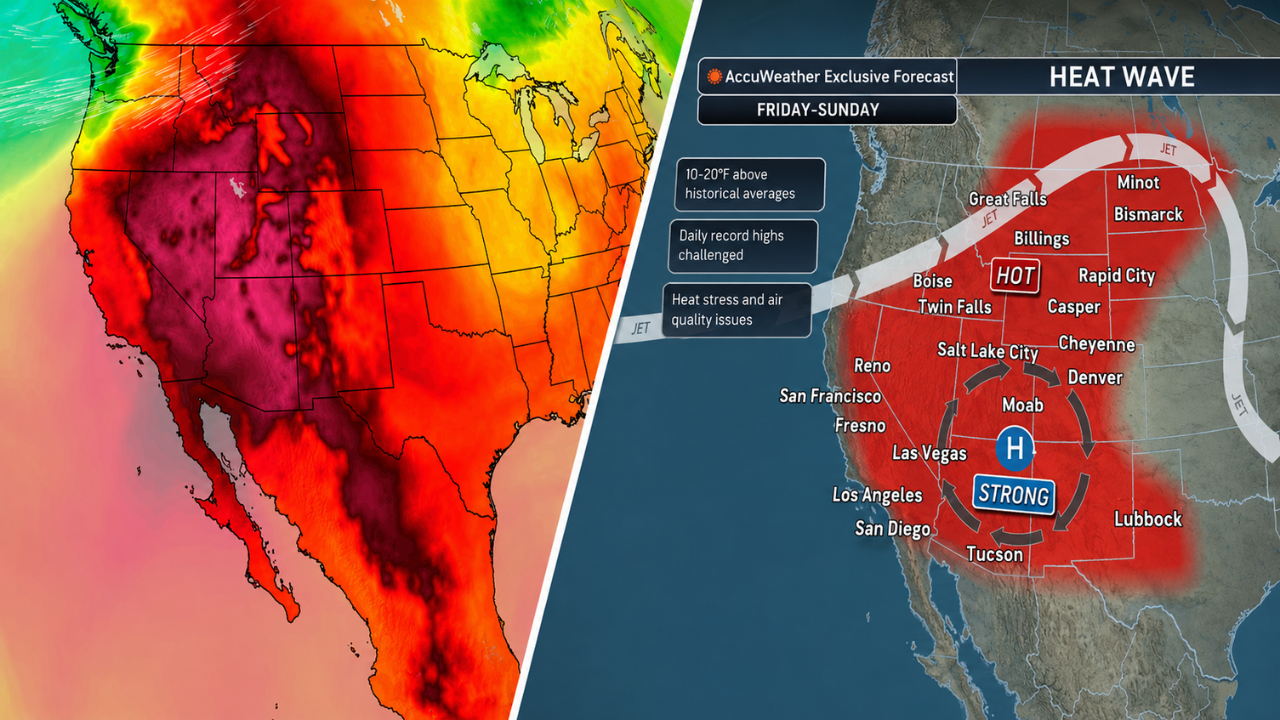
A dangerous US heat dome may bring record-breaking temperatures to parts of the United States this weekend, raising concerns about heat-related illness, power demand, wildfire conditions and limited overnight cooling. Some areas may see the worst heat, but the exact temperatures and warning zones will depend on the ultimate path of the high pressure system.
US heat dome forecast: Temps could stay way above normal for days In some places, high humidity makes it feel even more dangerous than the air temperature, hiking up the heat index.
What is a heat dome?
A heat dome is a high pressure system that traps hot air in an area. It is a strong high pressure system which suppresses the warm air at the surface.
Less clouds forming, less rain, because the air is sinking. And so the temperature can just keep on going up and up. The weather pattern can lock in so that the impacted communities experience a long heat wave not a short warm spell.
Cities are especially vulnerable because roads, buildings and concrete absorb heat during the day and slowly release it at night.
Record temperatures are about to be broken.
Some cities may tie or break records for daily temperatures this weekend.
Highs this afternoon could be in the upper 90s, perhaps even topping 100 degrees in the hottest spots. In humid areas, the heat index can be dangerous even if the real temperature is a little lower.
“Forecast records will have to be watched closely as things can change with the weekend coming up. Your best bet for the most localised information for cities and counties is to check with your local National Weather Service office.
Heat and health risks rise overnight.
Among the most dangerous parts of a long-term heat event are the warm nights.
If the heat persists after dark, the body has less opportunity to recover from the day’s exposure. Houses without air conditioning could reach dangerous temperatures, especially on upper floors or in densely packed neighbourhoods.
Older adults, infants, outdoor workers, pregnant women and people with heart or lung disease are at greater risk.
Heat Stroke and Heat Exhaustion
Signs and symptoms of heat exhaustion are heavy sweating, weakness, nausea, dizziness and headache or muscle cramps.
If people have symptoms, they should be moved to a cooler place and given water as appropriate. Heat stroke is a medical emergency and symptoms can include confusion, fainting, seizures or a very high body temperature.
If you suspect heat stroke, call emergency services right away.
Power demand may rise
Air-conditioners may be used considerably more during the hottest hours.
Utilities could be under serious strain, especially if the heat has lasted for more than a few days. Residents are asked to charge their cell phones, reduce electricity use where possible and prepare for potential local outages of power.
People who depend on powered medical devices should have a backup plan.
Wildfire risk may increase
Hot weather can make dry regions more susceptible to wildfires.
Dry fuels, gusty winds and low humidity can create conditions to ignite and quickly spread fires. Residents do not encourage open burning, dropping cigarettes with disregard and any actions that may cause sparks.
Stay informed of local fire restrictions and evacuation notices.
Sources
- National Weather Service – Official heat warnings, forecasts and safety information
- National Oceanic and Atmospheric Administration – Data on weather and climate patterns
- Centres for Disease Control and Prevention – Tips to prevent heat illness and symptoms
- Ready.gov – preparation, emergency tips.
- Local Emergency Management Agencies – Cooling Centres & Regional Safety Alerts
- National Interagency Fire Centre – Fire danger maps and wildfire info