

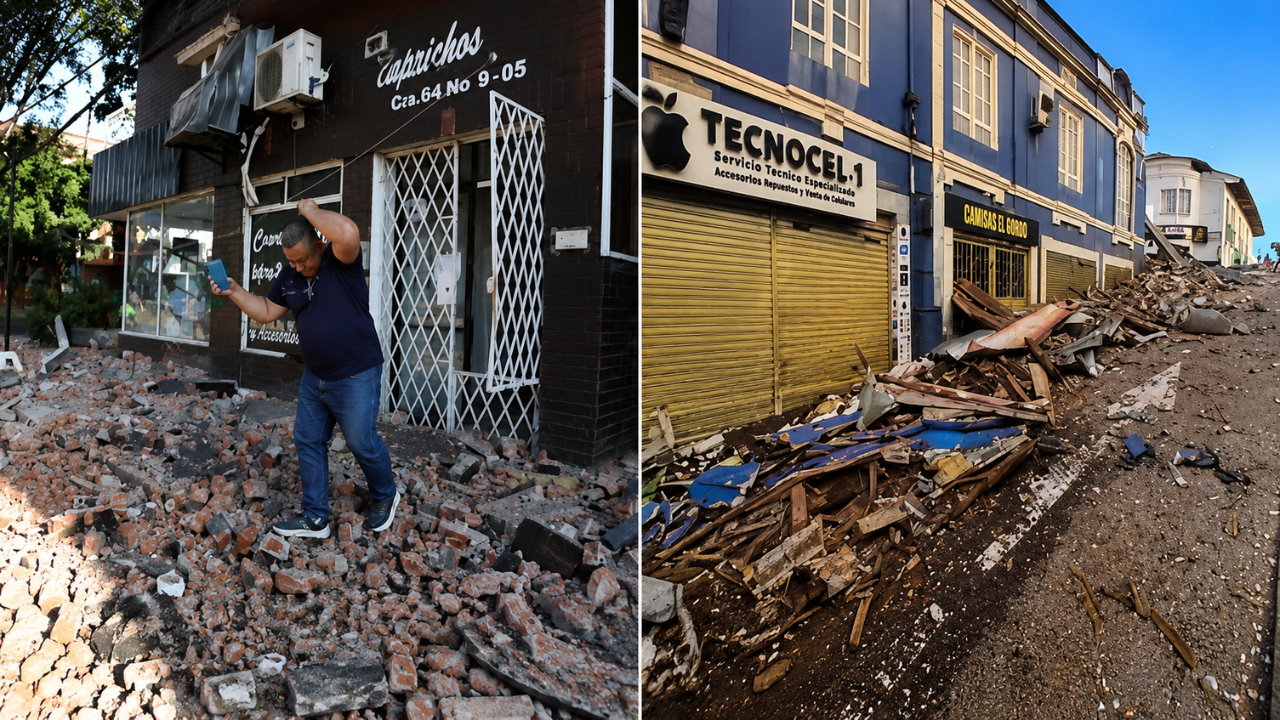
Colombia Earthquake – A video making the rounds online shows the terrifying moments of a magnitude 7.4 earthquake reported in Colombia, with buildings and objects shaking and people reacting to the sudden movement. The footage has attracted worldwide attention, including in the United States, as authorities and agencies monitoring earthquakes assess the incident and look for any potential damage. The quake is considered potentially capable of producing strong shaking, but the actual effects depend very much on depth, distance from populated areas, construction standards and local geology.
Widespread Panic as Strong Earthquake Strikes
7.4 is a large earthquake . You can feel it in a large area .
Depending on how far they are from the epicentre, residents could experience several seconds or more of strong shaking. Strong earthquakes can cause furniture to move, objects to fall off shelves and damage to structures not built to withstand seismic forces.
Immediately after such an event, authorities usually begin rapid assessments to determine which communities felt the strongest shaking.
Video captures scary moments of quake
Videos circulating after the earthquake appear to show people reacting as their surroundings moved suddenly.
Videos of earthquakes can give a dramatic sense of the shaking, but before using videos posted to social media to determine the location, timing or severity of damage, they should be verified.
Older earthquake footage can be recirculated during breaking news events, so it’s especially important to confirm with established news organisations and government agencies.
Serious Damage Can Be Caused By Magnitude 7.4 Earthquakes
Earthquake magnitude is a measure of the energy radiated from a seismic event, not of the damage it does in a particular community.
A 7.4 earthquake releases a lot more energy than moderate earthquakes , but the effects can be quite different . A shallow quake, directly below the city, can do more damage on the surface than a deep one far from where people live.
And the quality of construction and the soil conditions can also affect the severity of impact on individual neighbourhoods.
Main Earthquake May Lead to Aftershocks
Aftershocks are common in large earthquakes, as the surrounding crust relaxes after the initial rupture.
Most aftershocks are smaller than the main earthquake . Some can still produce strong shaking and create additional hazards , especially near already damaged buildings .
In the aftermath of a major earthquake, residents in affected areas are generally advised to be cautious and to follow the advice of emergency officials regarding unsafe buildings and evacuation areas.
Colombian officials assess potential damage
Following a major earthquake, emergency agencies typically inspect roads, bridges, hospitals, utility systems and buildings.
Officials also may get reports slowly from remote communities, meaning early estimates of damage or injuries can change dramatically in the first few hours.
That’s why early casualty and damage estimates should be treated as preliminary until Colombian authorities issue confirmed updates.
USGS: A Critical Player in World Earthquake Monitoring
The U.S. Geological Survey monitors earthquakes around the globe and releases information including magnitude, location, depth and estimates of how strongly different areas may have experienced shaking.
U.S. media, emergency agencies, researchers and the public use its earthquake information during large seismic events occurring internationally.
Numbers early in the process sometimes change as the agency revises an earthquake’s reported magnitude after scientists obtain more seismic data.
Source
- U.S. Geological Survey (USGS) – Worldwide earthquake information, magnitude, location, depth and seismic impact
- USA Today – Video & breaking-news coverage of the reported earthquake in Colombia
- AP – International disaster coverage and confirmed updates from Colombia
- Reuters – International earthquake coverage, emergency response, and confirmed damage assessments