

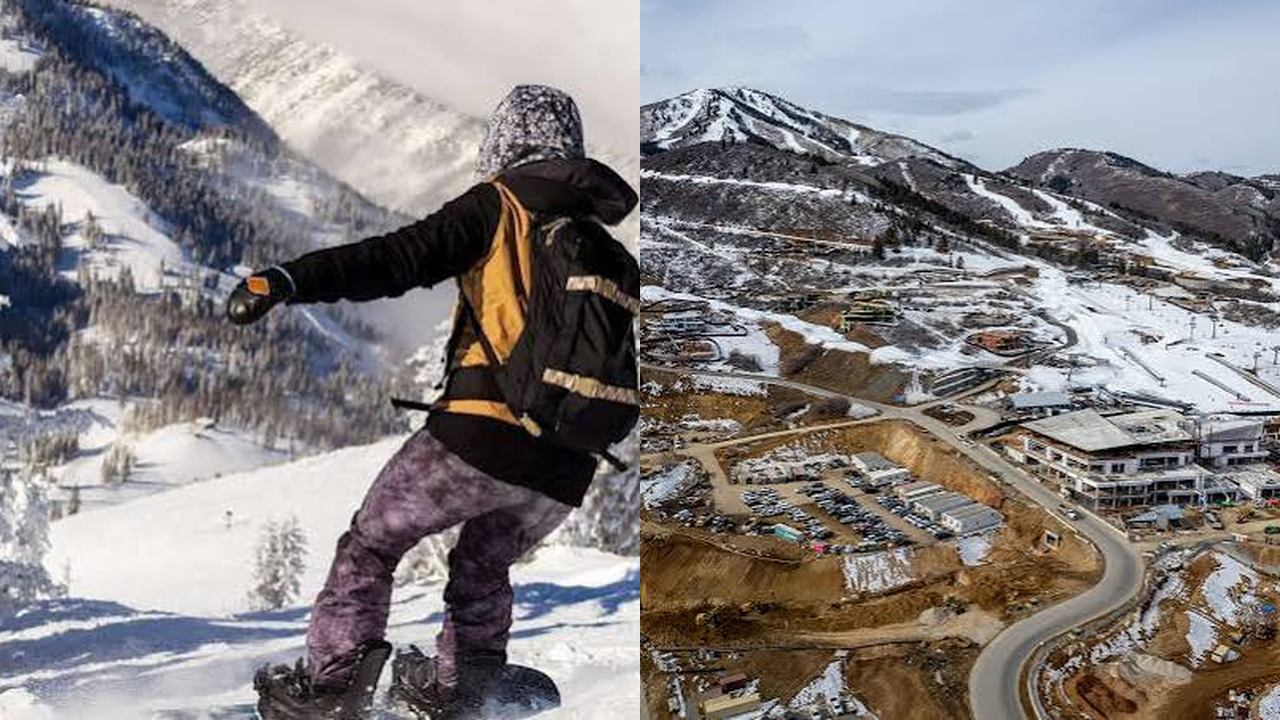
Utah ski season 2026-27 could be strong if early long-range weather signals translate to frequent winter storms and healthy mountain snowfall. That prospect is already having skiers and snowboarders buzzing, particularly as Utah’s reputation for deep, dry powder has made it one of America’s top winter destinations. But forecasters also warn of major uncertainty in long-range outlooks and that a promising seasonal pattern doesn’t necessarily mean consistent snow at all resorts.
Utah May Have Another Big Ski Season
Utah’s Wasatch Mountains are known for its large amounts of light, dry snow.
When the Pacific storm systems pass over the western US in a favourable way, Utah can take advantage of successive rounds of mountain snow that create a deep base and allow for long ski seasons.
That’s why the earliest signs of a good winter pattern draw attention from resorts, travellers and local businesses.
Long-Range Forecasts Show Possibilities, Not Certainties
Very different, seasonal forecasts are not short term weather forecasts.
Meteorologists can see the big climate patterns that suggest a season will be wetter, colder, warmer or drier months out, but they can’t reliably predict individual storms far ahead of time.
A winter outlook may show above-normal precipitation across part of the West, but it will still leave a lot of uncertainty about exactly where the heaviest snow will fall.
The Catch May Be Temperature
Precipitation isn’t always the deciding factor in good skiing, but it’s one of the biggest concerns for ski areas.
Some storms could bring rain at lower elevations or wetter, heavier snow instead of Utah’s famous powder if temperatures run warmer than normal.
Warmer periods can also reduce snow quality, lead to freeze-thaw cycles and alter the length of time that lower-elevation terrain remains open.
That means you have to look at snowfall totals and temperature trends together.
Storm Track Will Be Crucial
Utah’s ski season is heavily influenced by where the winter storm track sits.
A small shift north or south can dramatically alter snowfall totals across the Wasatch.
Some climate patterns can bring active weather to parts of the western U.S., but leave Utah between the wettest storm corridors.
For skiers, that means a strong regional winter outlook doesn’t guaranty record snowfall at every mountain.
Resorts Harvest Natural Snow Early
“Early storms, strong storms can make a big difference.
Natural snowfall in November and December allows resorts to open more terrain sooner and need less snowmaking during the first part of the season.
Having a solid base also provides better conditions for later storms, as fresh powder can fall on top of established coverage instead of bare ground.
Early season snow often has a huge impact on how much terrain will be open for people heading out on holiday trips.
Sources
- NOAA Climate Prediction Centre – U.S. Seasonal Temperature and Precipitation Outlooks
- National Weather Service Salt Lake City – Utah mountain forecasts, winter storm, weather alerts
- Utah Avalanche Centre – Avalanche forecasts, snowpack conditions and mountain safety info
- Ski Utah – Utah resort info, snowfall reports & ski-season updates
- NRCS Utah Snow Survey – Monitoring Mountain Snowpack and Snow Water Equivalent