

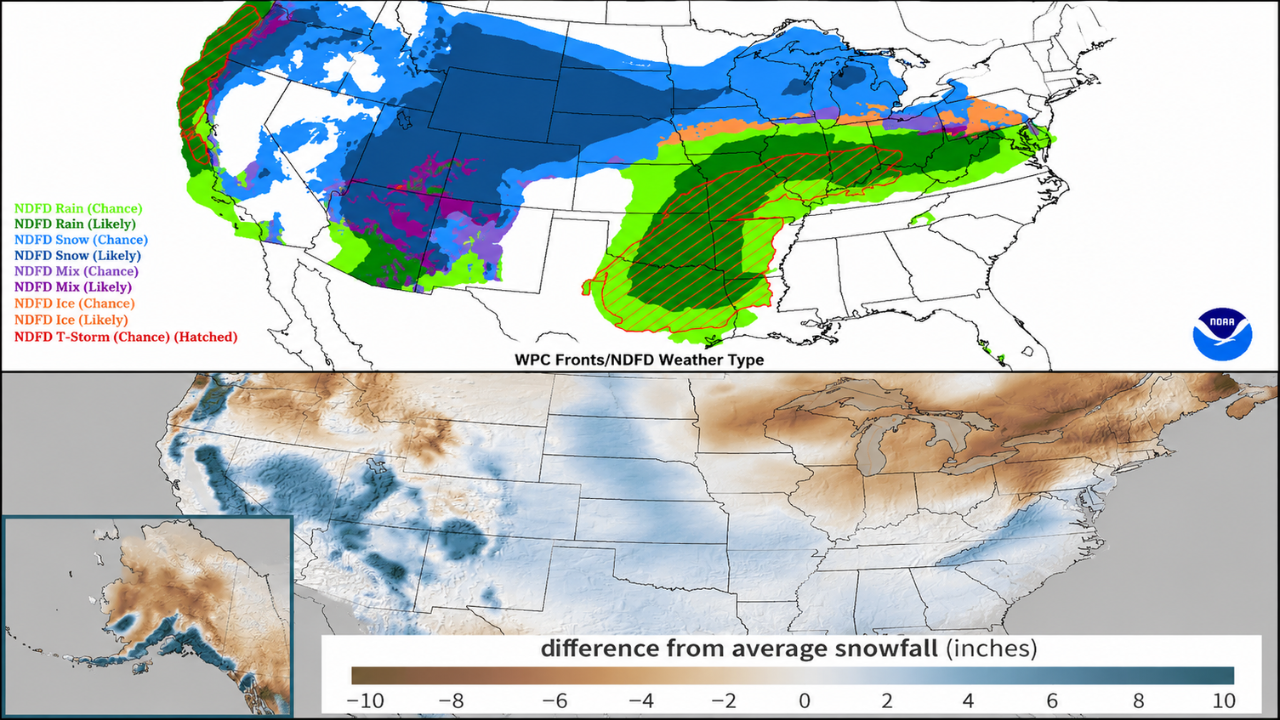
A new US Historic Snowfall risk map is drawing attention for pointing out states that may experience unusually severe winter weather. The outlook reportedly highlights areas where atmospheric patterns could produce heavy snow, dangerous travel conditions, power outages and prolonged bouts of extreme cold.
The reported U.S. historic snowfall risk map is an early planning tool and not a guaranteed forecast. Long-range winter outlooks can describe general trends, but the exact location, timing and strength of individual snowstorms usually comes into better focus only days before they develop.
Most Snow Possibility in Northern States
Typically, states in the country’s northern tier are at the highest risk for significant snowfall, given their colder climate and more frequent exposure to winter storm systems.
Some areas of Montana, North Dakota, South Dakota, Minnesota, Wisconsin and Michigan could be among the areas highlighted for elevated potential for snowfall. These states are no strangers to Arctic air, strong winds and long winter storms.
Heavy snow and high winds can combine to produce blizzard conditions, making travel very hazardous.
Great Lakes Possible for Lake-Effect Snow
Lake-effect snow could cause additional dangers for communities around the Great Lakes.
This phenomenon occurs when cold air passes over relatively warm lake water, picking up moisture and then dumping intense snow bands downwind. These bands can produce quite different conditions over short distances.
The states most often affected are Michigan, Wisconsin, Ohio, Pennsylvania and New York. Some areas could see a heavy accumulation but nearby communities see much lighter snow.
Heavy storms still a threat in the North-east
The North-east could also see significant winter weather if the right conditions are present for coastal storms.
New York, Pennsylvania, Massachusetts, Vermont, New Hampshire and Maine can be affected by major snowstorms. Depending on the storm track and temperature, cities along the Interstate 95 corridor could see snow, freezing rain, rain or a mix of the three.
Small shifts in a storm’s course can have a dramatic impact on accumulation totals.
Mountain West Could See Heavy Snow Accumulation
Higher elevations in the Rocky Mountains and western ranges experience heavy snow naturally.
Active weather patterns can produce significant mountain accumulation in Colorado, Wyoming, Utah, Idaho, Montana, Washington, Oregon and California. The snow in these areas is important for water supplies, feeding rivers and reservoirs during the spring melt.
But heavy snowfall can also be dangerous due to the risk of avalanches and problems with mountain travel.
Central States may face rapidly changing conditions
The central U.S. could see dramatic temperature swings and strong winter storms.
Nebraska, Kansas, Iowa, Missouri, Illinois and Indiana can get heavy snow when cold air from the north hits moisture moving north from the Gulf of Mexico. These storms can also bring ice, high winds, and dangerous wind chills.
A storm may start as rain and then change to freezing rain or snow as temperatures drop.
Southern states not completely safe
While southern states generally get less snow, serious disruption can happen when winter weather hits.
Strong cold-air outbreaks could threaten Texas, Oklahoma, Arkansas, Tennessee, Kentucky, North Carolina and Virginia. Even a little snow or ice can cause huge transportation problems in regions that don’t have a lot of winter equipment.
Freezing rain can be more dangerous than snow because it can bring down trees and power lines.
Sources
- National Weather Service – Noaa local forecast and winter storm watches and warnings.
- NOAA Climate Prediction Centre – Seasonal outlooks for temperature and precipitation.
- NOAA – Snow and Climate Records, Historical.
- National Snow and Ice Data Centre – Snow cover, climate, and winter research
- Federal Emergency Management Agency – Emergency guidance and winter storm preparation.
- State DOTs – Road conditions, closures and winter travel information.