

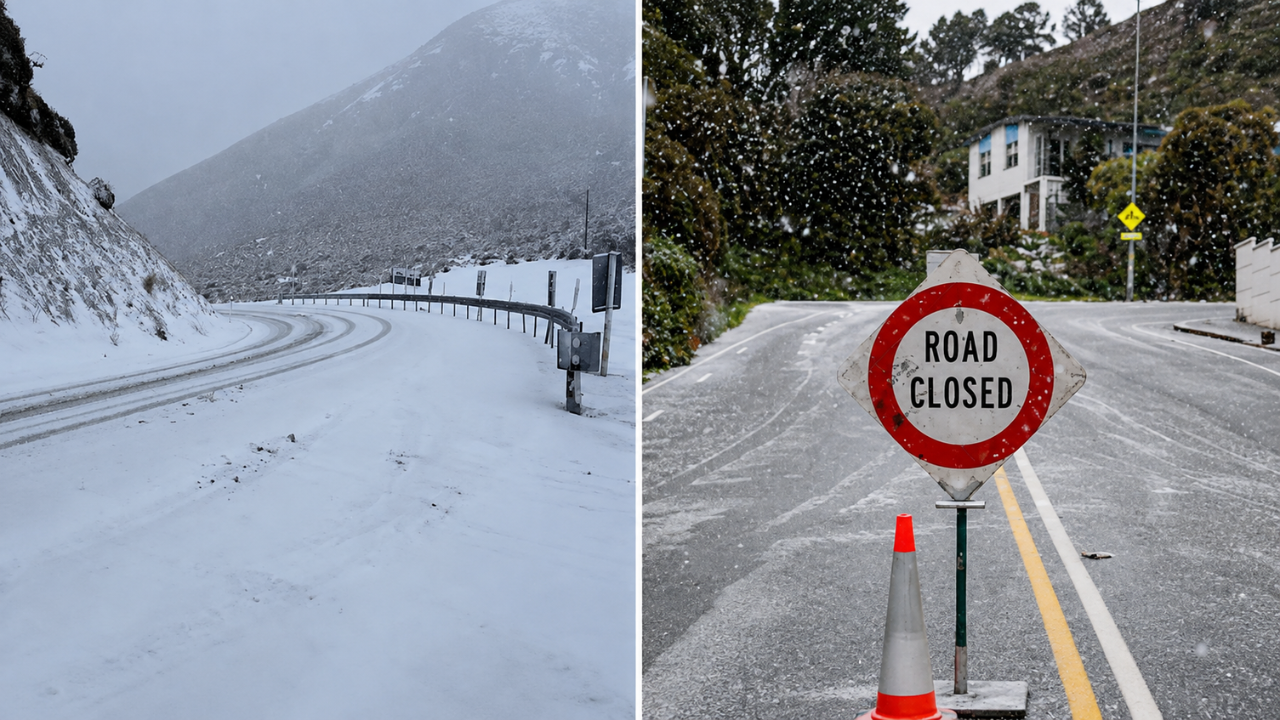
South Island Snow Hits Highways – Heavy snow in parts of New Zealand’s South Island is creating hazardous driving conditions on major highways, with transport officials warning drivers of slippery roads, reduced visibility and possible disruption to travel. Winter weather can change rapidly on alpine routes, especially when snow, ice and strong winds are combined. NZTA warnings are particularly relevant for drivers travelling on higher-elevation roads where conditions can change much faster than in neighbouring towns.
Snow Causes Problems On South Island Roads
Snow can have an immediate effect on South Island highways, with a number of key routes traversing high country.
The road surface may be covered with snow or black ice . This greatly reduces the effectiveness of braking and steering . Even roads that seem clear in one place can become treacherous a few kilometres down the road as the elevation increases.
Therefore drivers travelling through alpine regions should expect changing conditions during the same journey.
NZTA Travel Warnings Now Vital for Drivers
The New Zealand Transport Agency provides road condition information to help motorists make decisions about the safety of travel.
During severe winter weather, authorities may issue warnings for snow, ice, limited visibility or temporary restrictions.
If conditions become too hazardous for normal traffic, roads may also be closed.
“Checking official travel information before you head out is especially important as conditions can change while you are already on the road.
Biggest snow risk on Alpine highways
Among the most likely to be disrupted by winter are the mountain passes of the South Island.
Cold temperatures at higher elevations allow snow and ice to remain on road surfaces longer. Strong winds can also blow fresh snow across cleared sections of highway, reducing visibility and creating new icy patches.
Even if the roads are still technically open, these conditions can make journeys much slower.
Black Ice is Difficult to See
Black ice is one of the biggest hazards when driving in winter.
Thin layers of ice are difficult for motorists to notice until a vehicle begins to lose traction . Unlike visible snow , thin layers of ice can blend into the road surface .
“Black ice is most common during the colder overnight and early morning hours, and on bridges and shaded areas of road.
Going slower and increasing the distance between vehicles can help mitigate the risk in icy conditions.
Snowfall Could Impact Freight and Local Travel
Highway disruption can have effects beyond the individual motorist.
South Island roads are essential for freight, tourism and links between smaller communities. Major routes may be blocked or difficult to use, causing delays in deliveries and journeys with long detours.
Official road updates are also important for businesses, as well as private travellers, since winter conditions can impact buses and other commercial transport services.
Drivers warned to add extra time to journeys
Even if the road is not closed, snow can cause major travel delays.
A road crew may need to clear snow, spread grit or manage traffic through particularly dangerous sections. Vehicles may also be required to slow down.
Attempting to drive at usual speeds in winter conditions increases the odds of crashes because stopping distances are dramatically longer on snow or ice.
Weather forecasts can change fast
The mountainous terrain and fast moving weather patterns affect South Island winter weather.
Sometimes, a forecast of snow at higher elevations can trickle down to lower areas if temperatures drop. Rain can change to snow as drivers head up towards mountain passes.
That makes weather forecasts and road-condition reports important when planning a longer trip.
Sources
- Waka Kotahi – New Zealand Transport Agency – Official highway conditions, closures and travel alerts
- MetService New Zealand — Snow forecasts, severe weather warnings and local conditions
- New Zealand Civil Defence – Severe weather and emergency readiness information
- New Zealand Police – Travel disruption information and road safety tips
- RNZ – New Zealand weather, transport and regional news reports