

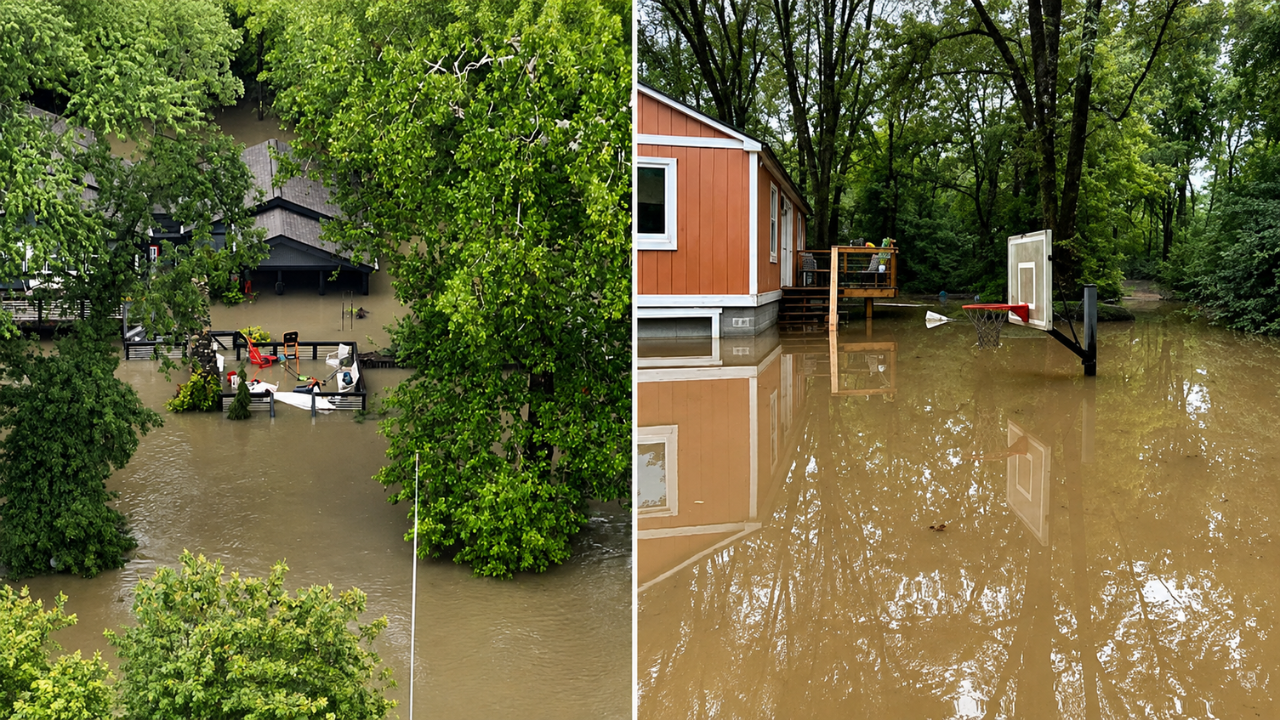
Indianapolis Flooding Swamps – Parts of Indianapolis have reportedly been hit by severe flooding with dramatic images showing the scale of the damage as homes, streets and vehicles are left surrounded by water. Drainage systems are easily overtaxed by heavy rain, particularly when several storms move through the same area in a short amount of time. The recent flooding has made travelling more difficult, increased the worries of property owners and forced residents to cope with water entering neighbourhoods and low-lying areas.
Heavy rain turns roads into treacherous rivers
Urban flooding can happen quickly because storm drains can’t keep up with the amount of rain falling in a short period of time.
The report said standing water on some streets made them difficult or unsafe to use, and flooded roads were among the most visible signs of the impact of the storm in Indianapolis.
It is often hard to judge the depth of water from inside a vehicle and drivers are particularly vulnerable. Even shallow moving water can suck away traction and stall a vehicle.
Flood Damage to Buildings Flooding Causes
For homeowners, floodwater can be a serious problem, even after the rain has stopped.
Water that seeps into basements, garages and lower levels can damage walls, floors, electrical systems, appliances and personal belongings.
The longer water is left on a property the greater the chance of mould and structural damage.
Those returning to flooded homes should also be cautious of electrical equipment and wiring that might be compromised.
Stunning photos show how bad the flooding is in Indy
Images from the hit areas shows roads underwater, water around homes and vehicles underwater in flooded sections.
One of the best ways to see the scale of an urban flooding event is through pictures, because rainfall totals don’t always tell the story of how bad it was for individual neighbourhoods.
Low-lying streets and locations near drainage channels may be flooded to a much greater extent than surrounding areas.
Travel Disruption Continues
Local and regional transportation can be quickly disrupted by flooding.
Road closures, stalled vehicles and damaged traffic signals and standing water could all make normal trips take much longer.
Commuters may also be impacted on alternate routes from the same storm system.
Authorities generally recommend drivers stay off flooded roads, not drive into water.
Flash Flooding Can Occur Rapidly
One of the great dangers of heavy rain is the speed at which things can change.
Even a reasonable road can be flooded in minutes if neighbouring drainage systems overflow.
Flash flooding is especially dangerous at night because it’s harder to see how deep the water is and drivers may not see areas of damaged pavement or areas that have washed out.
And don’t forget: Weather warnings and local emergency notifications remain crucial in these fast-moving events.
“Hard Hit Areas May Take Days to Clean Up
But when flood waters begin to recede, residents and city crews have a tough clean-up job.
Mud, debris, damaged furniture and contaminated water may need to be cleared from properties and streets.
Public works crews also can inspect roads, bridges and other infrastructure for hidden damage.
It may take some families a long time to recover, if major repairs or insurance claims are involved.
Floodwater is a Health Risk
Never regard floodwater as clean rainwater.
It can carry sewage, chemicals, oil, bacteria and debris picked up as it travels through streets and properties.
People involved in cleanup should avoid unnecessary contact with standing water and follow local health guidance.
Food, medicine or household items that have been contaminated may also have to be thrown away.
Sources
- National Weather Service (NWS) Indianapolis – Flood warnings, rain forecasts and severe weather information
- City of Indianapolis – Local road conditions, public works news & emergency information
- Marion County Emergency Management – Local response and flood readiness information
- IndyStar – Flooding in and around Indianapolis: Photos, local coverage
- NOAA – Flash flood guidance: Severe weather safety