
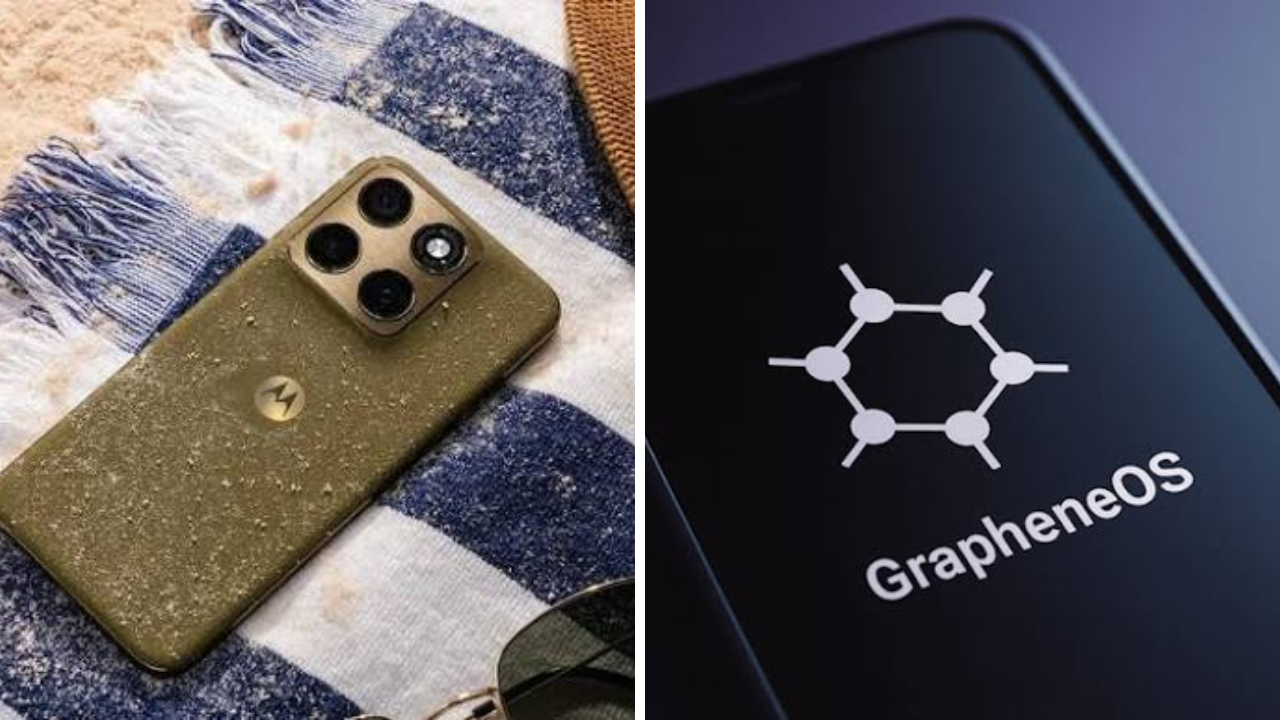
GrapheneOS New AI will come into the market and will help Android smartphones, but this time the company ditches Google Pixel phones and chooses Motorola over the Google Pixel lineup. Next year, this OS will come in the non-folding Motorola smartphone.
Basically, GrapheneOS is a free, open-source operating system for smartphone users and Android users; it is designs as heavily on privacy and security.
Motorola Flagships Will Get GrapheneOS Support First
According to the latest details from GrapheneOS, its initial Motorola will focus on a conventional, non-folding flagship smartphone for their rollout. Support for additional Motorola flagship form factors, including the Razr Fold and Razr Ultra, is planned afterward.
The first compatible Motorola devices are expected to arrive in 2027. GrapheneOS says the future hardware needs to meet its security requirements before official support can be provided.
This means existing Motorola smartphones should not automatically be assumed to be compatible with GrapheneOS. The project has specific hardware and software requirements that manufacturers must meet.
Why Motorola Could Be Important for GrapheneOS
The partnership is significant because Motorola is expected to work directly with GrapheneOS on firmware, drivers and other device-specific components.
This could make it easier for GrapheneOS developers to maintain the operating system and deliver updates alongside major Android releases. The project has also indicated that future Motorola hardware could make its development process easier in some areas than supporting newer Pixel hardware.
For privacy-focused users, regular security updates are particularly important. A secure operating system still depends on timely patches for vulnerabilities affecting the underlying hardware and software.
New Hardware
Could Bring Stronger Security
One of the biggest reasons future Motorola devices are being considered is the security capabilities expected from next-generation Qualcomm flagship hardware.
GrapheneOS has highlighted requirements involving hardware memory tagging and secure-element integration. Future Snapdragon flagship platforms are expected to provide the capabilities needed for the project’s security standards.
These technologies can help strengthen hardware-level protection and make certain types of attacks more difficult.
Seven Years of Software Support
Long-term software support is another important requirement for GrapheneOS-compatible Motorola devices.
The project has indicated that supported devices need a lengthy update commitment, while Motorola’s newer high-end devices are moving toward longer software-support periods. Reports indicate that the planned GrapheneOS-compatible Motorola flagships could receive seven years of updates.
That could make the upcoming devices more attractive to users who want to keep the same smartphone for several years without sacrificing security updates.
Razr Fold and Razr Ultra Support Is Also Planned
Motorola’s partnership with GrapheneOS is not expected to stop with traditional flagship phones.
The project plans to expand support to Motorola’s Razr Fold and Razr Ultra models after the initial flagship rollout. If the plans remain on schedule, this would bring GrapheneOS to additional foldable form factors.
The Razr Ultra could be particularly notable because it would introduce GrapheneOS support to a flip-style foldable smartphone.
Motorola GrapheneOS Phones Could Cost More Than Pixels
Privacy-focused buyers should also expect these devices to target the premium segment.
Recent reports indicate that the first Motorola phones designed around GrapheneOS are expected to be higher-end devices and could cost more than comparable Google Pixel smartphones. Lower-cost Motorola models may take longer to qualify because they need to meet the required security hardware and software-support standards.
That means GrapheneOS on Motorola is initially unlikely to become a budget-phone option.
What This Means for Privacy-Focused Smartphone Users
The Motorola expansion could give GrapheneOS users another hardware option beyond Google Pixel.
More importantly, direct cooperation between a major smartphone manufacturer and the GrapheneOS project could make it easier to develop devices specifically designed around privacy and security requirements.
Read also: Mysterious Free AI Model Stuns Developers as Creators Remain Completely Unknown
Read also: Apple camera-equipped AirPods code reveals hardware details