

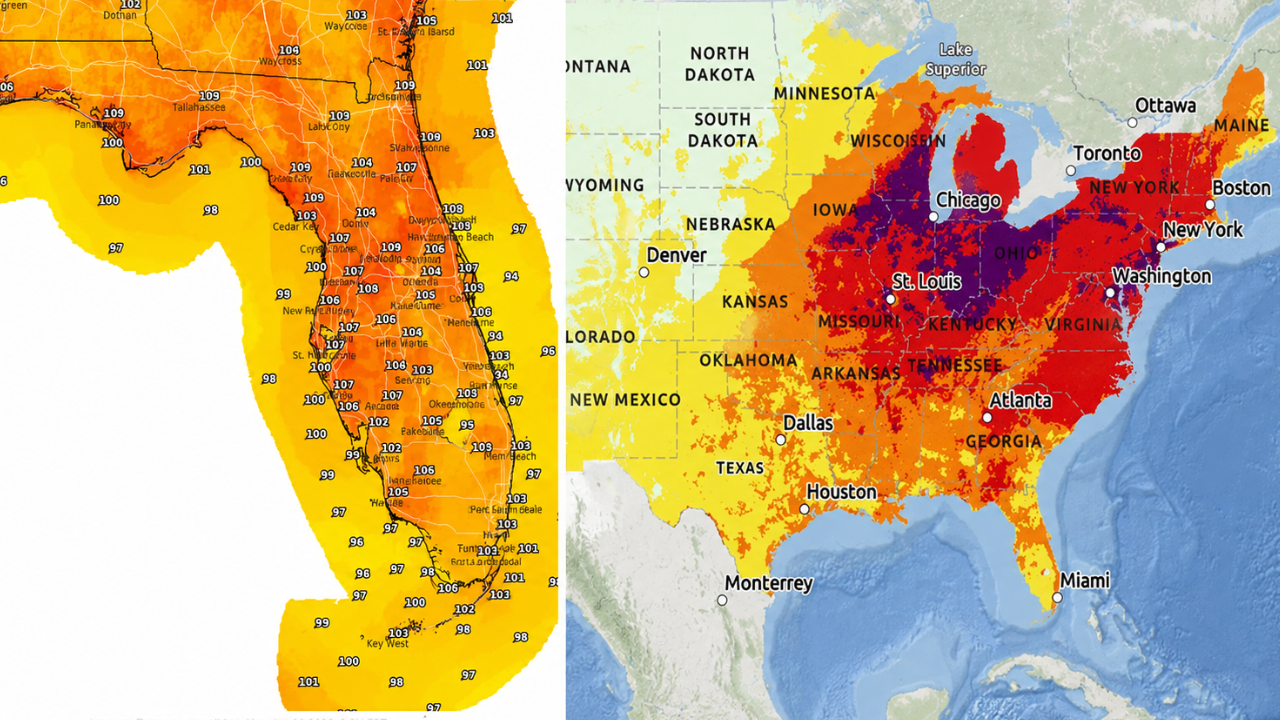
Florida Heat Dome – A dangerous stretch of heat is building across Florida with a strong heat dome helping to push feels-like temperatures close to 110 in some areas. When high air temperatures are combined with heavy humidity, the conditions can be especially dangerous, increasing the risk of heat exhaustion and heat stroke. The most vulnerable as the heat continues include residents, outdoor workers, older adults, children and people without reliable air conditioning.
Feels-Like Temps Approach 110; Concerns Rising
The heat index is a measure of how hot the weather feels to the human body, based on air temperature and humidity.
Extended time outdoors can be dangerous when the heat index nears 110 degrees, especially in the afternoon.
People can overheat much more quickly than that, especially if they are active, exercising, or in the sun for long periods of time.
South, Central Florida cooks in intense heat
Florida’s climate already lends itself to elevated humidity during summer, but a prolonged spell of high pressure can force conditions well above normal comfort levels.
Urban areas may be even hotter because roads, buildings and parking lots soak up heat in the day and slowly release it at night.
That can mean less overnight relief, and more pressure on people without air conditioning.
You can suffer from heat exhaustion quickly
One of the most common heat-related illnesses is heat exhaustion.
Symptoms include heavy sweating, dizziness, weakness, headache, nausea and a rapid heartbeat.
Those with these symptoms should go to a cooler place, drink water and reduce physical activity.
Seek emergency medical help if symptoms are severe or worsen towards confusion, fainting or loss of consciousness.
Heat stroke is a medical emergency.
Heat stroke is much more serious and can be life-threatening.
Confusion , very high body temperature , seizures , loss of consciousness , or unusual behaviour may be warning signs .
If someone has symptoms of heat stroke, they need emergency treatment right away.
Cool rapidly and urgently while you wait for medical help.
Higher risk for outdoor workers
Extreme heat can increase the risk to construction workers, landscapers, delivery drivers, agricultural workers and others who work outdoors for long periods of time.
Taking regular breaks, providing shade, hydration and reducing activity during the hottest part of the day can all help to reduce the risk.
When heat index values reach dangerous levels, employers also may need to adjust work schedules.
Cars Kill in an Hour
Even if the outside temperature isn’t extreme, vehicles can heat up quickly.
Never leave children or pets unattended in parked vehicles, not even for a minute.
Windows are of little use against the rapid increase in indoor temperatures.
Before getting out of a car, check the back seat. It can help prevent heat-related tragedies.
Electricity Demand May Jump Sharply
Long periods of heat can boost demand for air conditioning.
That can put extra stress on the electrical grid, especially during the hottest afternoon and evening hours.
Cooling systems will also run longer, leading to higher utility bills for residents.
Extreme heat events can quickly become a health crisis for vulnerable households if the power goes out.
Sources
- National Weather Service – Heat advisories, Excessive heat warnings, Heat index forecasts, Local warnings
- NOAA – Heat dome explanations, climate information and extreme heat guidance
- Florida Division of Emergency Management – Heat safety and emergency preparedness at the state level
- Centres for Disease Control and Prevention – Heat illness signs, prevention, and public health guidance
- Ready.gov – federal advice and tips on preparing for and staying safe in extreme heat