

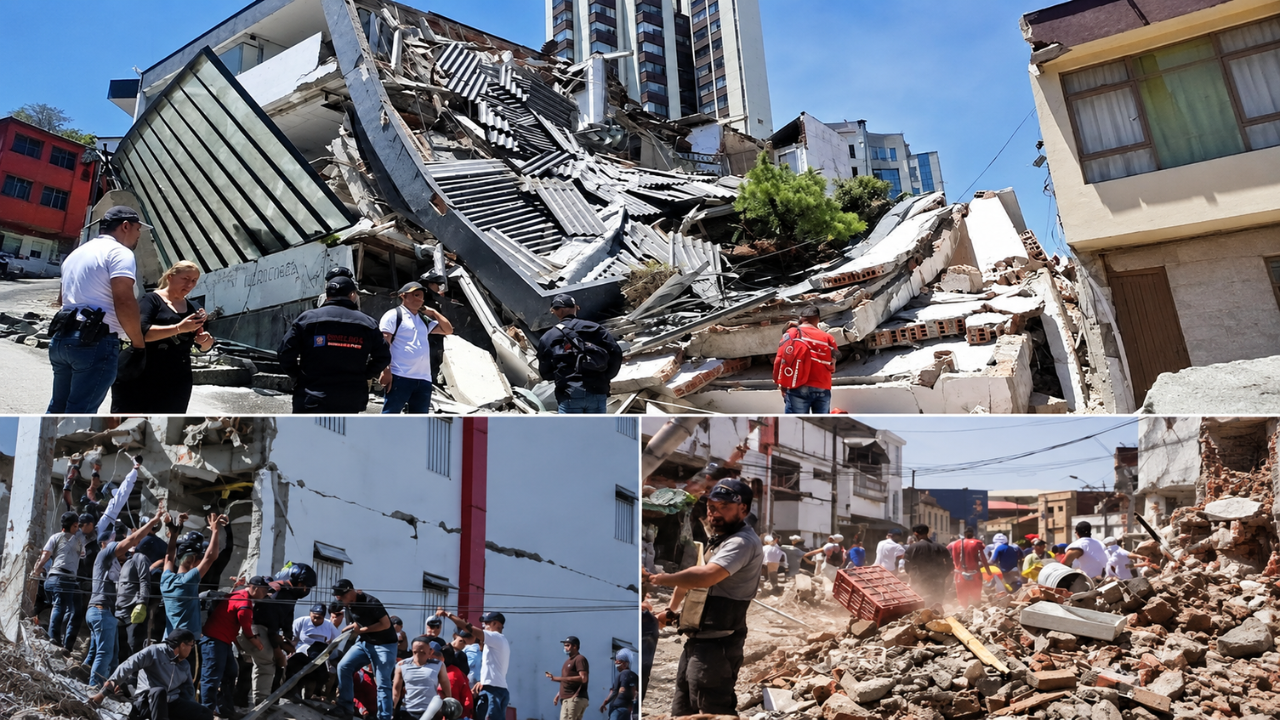
Fears are growing over the extent of the disaster as a powerful magnitude 7.4 Colombia Earthquake Death Toll Rises to 132 After Powerful 7.4 Magnitude Quake has so far killed 132 people and rescue teams continue to search for survivors. The powerful quake reportedly shook the beleaguered communities with violent tremors, damaging buildings and infrastructure and sending residents into the streets and open spaces. Rescuers are getting into damaged neighbourhoods and are learning more from areas that are harder to get to. They are expected to update the death toll.
Death Toll Reported from Major Quake
The mounting death toll from the quake points to a human toll that could be far higher than initially thought.
Casualty figures may change over the hours following a major disaster as emergency workers search collapsed buildings, hospitals report and officials hear from more communities.
Officials warned that early numbers could still change or be revised as rescue efforts go on.
Magnitude 7.4 Earthquake Could Shake Buildings Violently
A quake of 7.4 magnitude is considered a large quake.
Magnitude measures how much energy an earthquake releases, not the actual surface damage. Other factors, like the depth of the earthquake, its proximity to populated areas, the type of soil, and the strength of buildings, also matter a great deal.
Shallow earthquakes can be especially damaging to populated communities.
Rescue teams are searching for damage
The first order of business in a big earthquake is often to look for survivors in fallen or unstable structures.
Special equipment, rescue dogs and information from residents are used by rescue teams to find where people may be trapped.
But broken roads, landslides and broken communications can make those operations a whole lot harder, especially in Colombia’s mountainous regions.
Injured residents inundated Hospitals inundated
Local hospitals and emergency medical services could be overwhelmed by a big quake soon enough.
People can get injured by collapsing walls, broken glass, falling objects and in trying to escape from damaged buildings. Structural inspections might also be needed before hospitals can return to normal operations.
Authorities can set up temporary treatment centres in zones where hospitals are overcrowded or unsafe.
Aftershocks are still a big concern
Residents may still be experiencing aftershocks from the initial quake.
Aftershocks are usually not as bad as the main quake but they can bring down more buildings that were weakened by the first quake.
“We always tell residents not to go back into any damaged looking buildings until it has been deemed safe by engineers or local authorities,” said emergency officials.
Infrastructure damage could impede recovery.
Officials will have to check roads, bridges, electricity networks, water systems, communications infrastructure. The toll will be worked out.
Transport routes may also be disrupted, delaying the arrival of rescue equipment and humanitarian aid. Blackouts in power and communications prevent families from contacting relatives.
In mountainous regions, landslides are another hazard. Strong shaking can destabilise slopes and isolate communities.
Colombia has had great earthquakes for a long time.
Colombia is in an active zone where several big geologic plates and smaller bits of crust are colliding.
Throughout history, some devastating earthquakes have taken place in the country . The seismic environment makes earthquake resistant construction, monitoring networks and emergency planning even more important.
The Colombian Geological Service is vigilant to seismic activity and provides the general population with official data about earthquakes.
Sources
- Colombian Geological Service – Official monitoring of earthquakes in Colombia, seismic information and techniques
- USGS – Worldwide earthquake data (magnitude, depth, location) (independent source)
- Reuters – International Casualties, Rescue Work, Natural Disasters
- AP – Credible Global Reporting on Humanitarian Impact & Emergency Response