

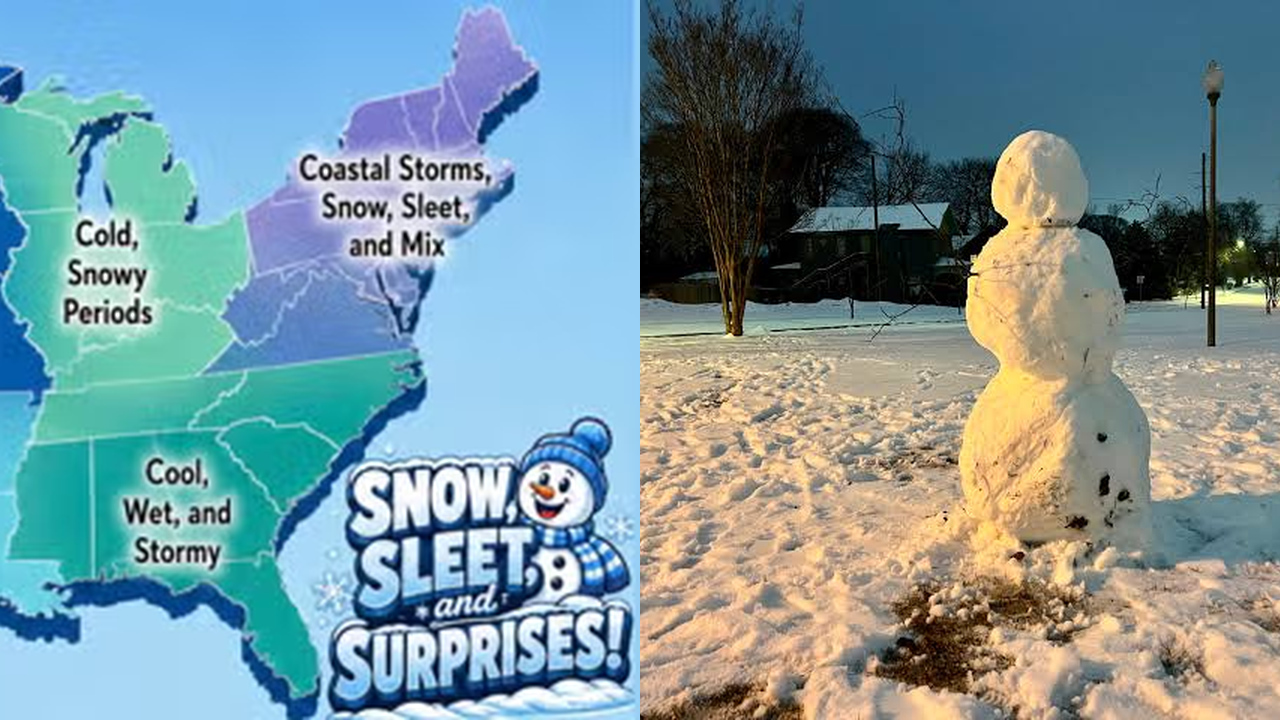
Alabama Winter Forecast 2026-27: The Farmer’s Almanack is said to release its long-range forecast indicating potential snow chances and shifting weather patterns across the state of Alabama for the 2026-27 winter season. The forecast has been attracting the attention of residents, farmers, travellers and weather enthusiasts keen to know what the coming winter could hold.
Some parts of the state could see periods of colder weather and possible snow in the reported Alabama winter forecast 2026-27. However, long range forecasts should be taken as a general trend and not as an exact forecast as it is difficult to forecast individual storms and snowfall events months ahead.
Farmer’s Almanack forecast sparks winter interest
The Farmer’s Almanack has been publishing seasonal predictions for more than two hundred years and is known for its long-range weather forecasts.
Its predictions are often based on traditional forecasting methods, climate patterns and past observations. These predictions are used by many people to plan agriculture, travel and seasonal activities.
But meteorologists say long-range forecasts are not as dependable as short-term weather models, which are more accurate the closer you get to an actual weather event.
More Snow Than Normal May Occur in Northern Alabama
The best chance of winter weather is typically in northern Alabama because of its higher elevation and proximity to colder air systems.
Snow and freezing temperatures are more likely in cities and towns in places such as Huntsville, the Tennessee Valley and nearby higher elevations than in areas in the southern part of the state.
Even in northern areas, snowfall can vary greatly from year to year depending on storm paths and temperature patterns.
Some brief winter weather possible in central Alabama
Central Alabama gets the mix of cold rain, freezing temps, ice, and occasional snow.
Winter storms can happen in areas near Birmingham, Montgomery and surrounding communities when cold air moves south and interacts with moisture from the Gulf of Mexico.
Small differences in temperature can mean the difference between rain, snow or ice; and that can be hard to forecast.
Southern Alabama Doesn’t See Much Snow
Southern Alabama generally sees fewer snowfall events because it is closer to the Gulf Coast and has warmer temperatures.
Most of the cities around Mobile and along the coast have mild winters, but a few winter storms bring freezing temperatures or light snow.
Even a small amount of snow or ice can cause big disruptions because many places are not ready for long periods of winter weather.
Farmers Keep an Eye on Winter Forecasts
Seasonal forecasts are particularly important for farmers and agricultural workers.
Cold temperatures, freezes and unusual weather patterns can affect crops, livestock and planting schedules.” Farmers often combine long-range forecasts with updated weather information during the season.
A more severe winter than usual may affect choices about crop protection and resource management.
Many Factors Influence Snow Forecasts
Several climate factors impact Alabama’s winter weather.
Snow development is influenced by temperature patterns, availability of moisture, jet stream movements, and larger atmospheric cycles. It doesn’t mean much snow from a colder forecast.
Meteorologists generally become more confident as they look at storms within a week or two of arrival.
Sources
- Farmer’s Almanack – Weather, gardening, astrology and other predictions.
- National Weather Service (NWS) – Winter weather warnings, forecasts, and climate information.
- NOAA Climate Prediction Centre – Seasonal Climate Outlooks and Temperature Forecasts
- Alabama Emergency Management Agency – Information on being prepared for winter weather
- National Centres for Environmental Information (NOAA) – Historical weather and climate data.