

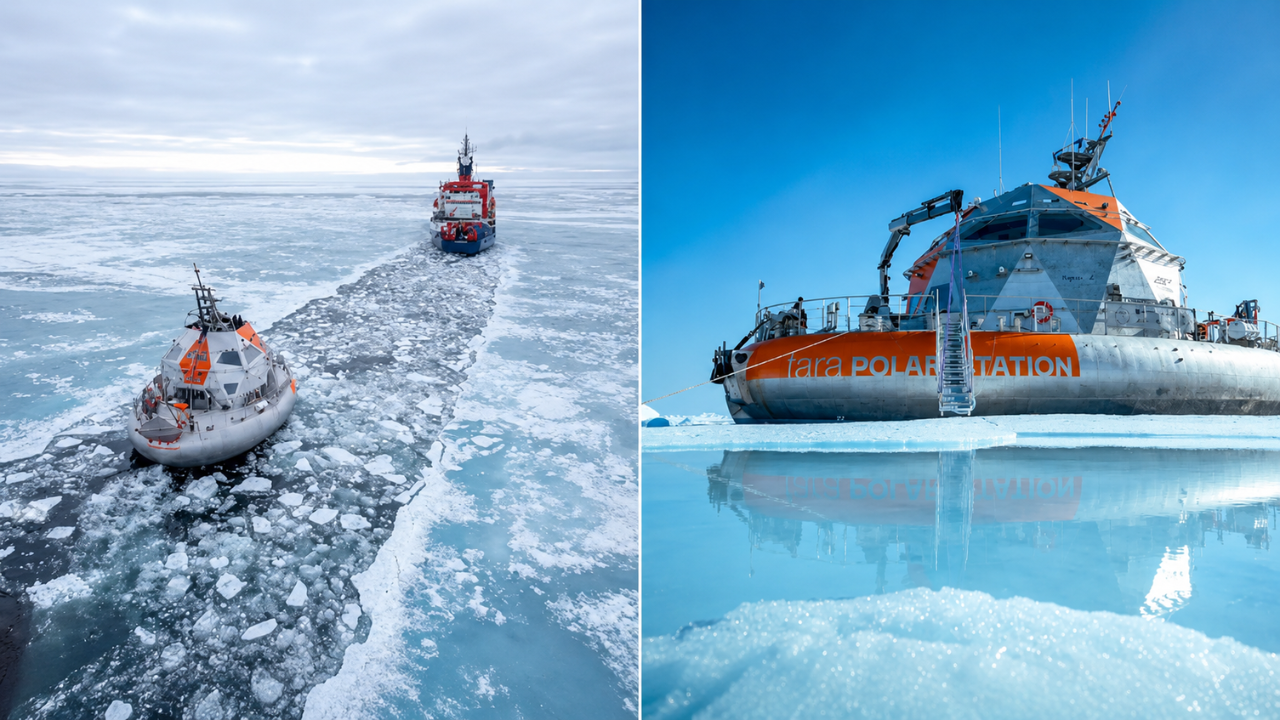
Scientists from across the world went on a 50-day voyage across the Arctic Ocean Expedition to study the impact of climate change and observe the quickly changing ecosystem in the region. The mission is expected to gather key data on sea ice, ocean temperatures, marine biodiversity and atmospheric conditions to help scientists understand one of the most rapidly changing environments on Earth.
The expedition to the Arctic Ocean will be aboard a specialist research vessel, and will include climate scientists, marine biologists, oceanographers and environmental researchers. The results could help inform climate models and shed light on how rising global temperatures will impact Arctic ecosystems.
Scientists to probe rapid environmental change
Over the last few decades, the Arctic has seen some of the most rapid environmental change anywhere.
The expedition will measure the thickness of the sea ice, ocean circulation, water temperature and salinity, and weather patterns. Scientists gather this information over long periods of time to compare current conditions with past records and to determine long-term environmental trends.
marine ecosystems should be the focus
One of the main objectives of the mission is the assessment of the state of the Arctic marine ecosystems.
Scientists will probably count the number of plankton, fish species, seabirds, marine mammals and small creatures that form the base of the Arctic food web. Many species are affected by small changes in water temperature or the amount of sea-ice, affecting their breeding cycles, migratory routes and food sources.
Mission Powered by Next Generation Technology
Today’s scientific expeditions use sophisticated equipment to gather accurate data on the environment.
The vessel will be equipped to carry satellite communications, underwater sensors, weather monitoring and autonomous sampling equipment, and will also have laboratory facilities to analyse water, ice and biological samples during the voyage. The technologies enable scientists to take continuous measurements on the expedition, not just one-off observations.
Why the Arctic is important to the world
The expedition is headed for the Arctic Ocean, but its results could have consequences well beyond the polar region.
Arctic sea ice is changing and these changes can impact weather patterns, sea levels and climate systems in many parts of the world. Ocean circulation and atmospheric conditions can also be affected. Scientists still are trying to understand how Arctic warming affects global temperatures, coastal communities and natural ecosystems.
The data could be valuable for future climate research.
The results of the expedition will be used for international climate research.
The information will allow scientists to improve computer models and better predict environmental change and how Arctic ecosystems will respond to changing conditions. Scientists can also compare their results with those from previous expeditions, and can maintain long-term monitoring programmes.
Anticipated Outcomes of the Expedition
On the 50-day voyage scientists will need to analyse samples and publish their findings in scientific journals, research organisations and official reports.
The findings could offer new insights into climate change, Arctic biodiversity and ocean processes that can help international efforts to understand and protect one of the planet’s most sensitive environments.
Sources
- National Oceanic and Atmospheric Administration (NOAA) – Oceanography, Climate, Arctic Observing
- National Snow and Ice Data Centre (NSIDC) – Arctic Sea Ice, Climate Records Data
- WMO – World Meteorological Organisation – Global climate monitoring & environmental research
- Arctic Council – Scientific cooperation & Arctic environment projects
- Nature Climate Change Nature Climate Change – environment and climate research, peer reviewed
- NASA – Earth Observatory Satellite Images Arctic Environment Monitoring Climate Science