
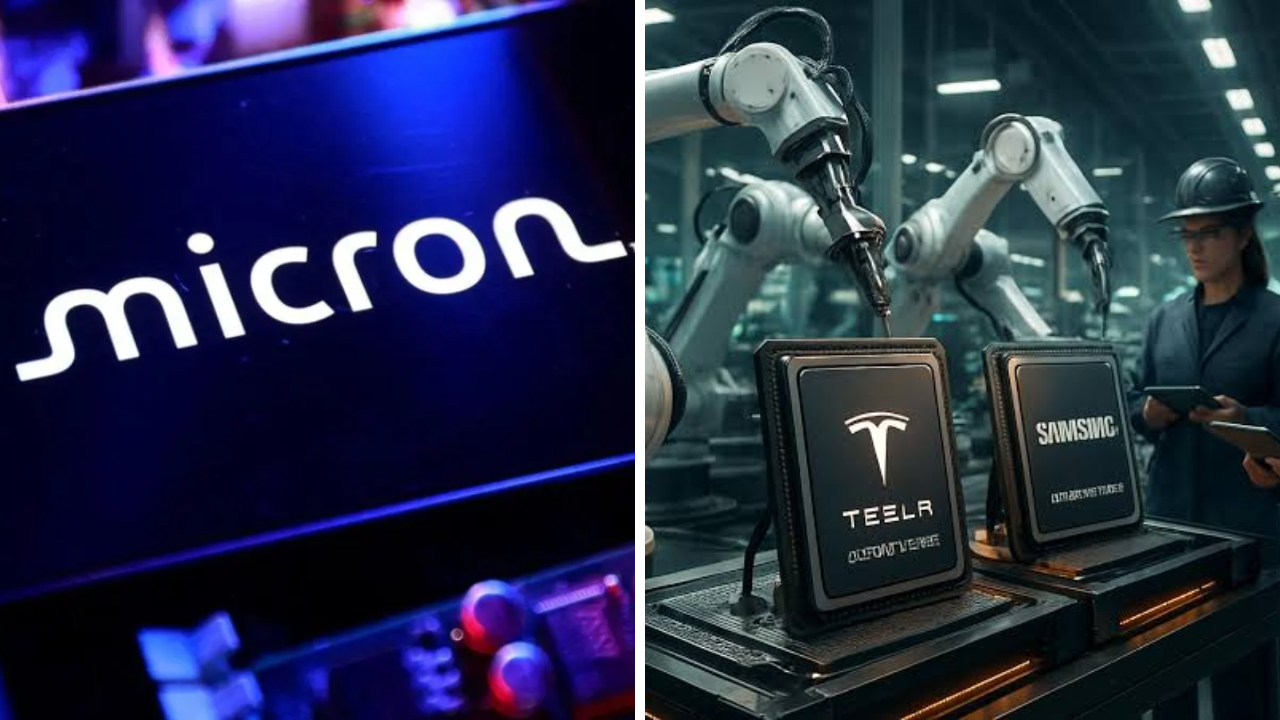
The global semiconductor market remains under continued demand pressure from artificial intelligence, data centres and advanced vehicle systems and Micron Technology has reportedly set aside some of its memory chip supply for Tesla. The ruling underscores the scramble among big customers to obtain high-performance memory as prices rise and supply is tightly controlled.
Both companies are key players in the growing AI ecosystem so the report on Micron Technology Tesla memory chips is of interest. Micron produces memory for automotive, networking, storage and computing systems. Tesla uses powerful onboard hardware for driver-assistance technology, vehicle software, manufacturing automation and AI development.
Tesla Could Receive Supply for Advanced Computing
Memory is used in Tesla’s modern cars for infotainment, cameras, sensor processing, navigation, connectivity and driver-assistance systems. More powerful computing platforms usually require more memory bandwidth and capacity to handle huge amount of information in a fast pace.
A formal supply pact with Micron may help Tesla hedge against the risk of component shortages as it develops new vehicles and refreshes existing hardware. Stable memory access may also benefit other artificial intelligence work at Tesla, including training infrastructure and autonomous driving research.
Tesla has not officially confirmed the specific type and amount of memory that has reportedly been allocated.
AI demand is reshaping the memory market
Tech companies building out AI server and data-center infrastructure are driving up demand for memory chips. Fast memory is also needed for advanced processors to move large amounts of data quickly . So memory is a key part of modern AI systems, not a second class citizen .
The most eye-catching memory, however, is high-bandwidth memory, because it tends to be paired with the best AI accelerators. Demand is also affecting traditional DRAM, graphics memory, storage products and specialised automotive components.
Manufacturers will need to learn how to share production capacity between cloud providers, chip designers, device makers and car makers. It can tighten supply and affect pricing in a number of product categories.
Hardware prices rise as prices could rise
The higher cost of the memory can push up the price of servers, PCs, cell phones, industrial systems and cars that connect to the internet. Companies that use a lot of memory may try to negotiate long term contracts to have predictable pricing and reliable deliveries.
Higher component costs also could be putting pressure on Tesla’s vehicle margins. It would need to balance technology upgrades with efforts to keep manufacturing costs in check.
If supply on offer keeps lagging demand, Micron could have better pricing. Still, the memory business is cyclical, with shortages typically followed by excess inventory and falling prices.
Supply Contracts Likely to Become More Common
As memory becomes an increasingly important part of AI systems, big tech may want to cosy up to the makers. Longer-term supply contracts, buy-side pre-commitments and direct capacity reservations could become more prevalent across the semiconductor industry.
These deals often give manufacturers better visibility into future demand and help customers avoid unexpected shortages. They also can make it harder for smaller companies with less buying power to compete for priority supplies.
The reported allocation to Micron and Tesla shows how access to critical components can become a strategic advantage, rather than a standard procurement decision.
Sources
- Micron Technology Investor Relations – Financials, manufacturing information, market commentary and official company announcements.
- Tesla Investor Relations – Official reports on vehicle technology, AI infrastructure, manufacturing, and financial results.
- Semiconductor Industry Association — Studies of chip demand, capacity, and trends in the worldwide semiconductor market.
- Bloomberg – Tech Companies Chip Markets AI Infrastructure Spending Automotive Hardware Coverage
- TrendForce – DRAM, High Bandwidth Memory, supply status, price trends, Market Research