
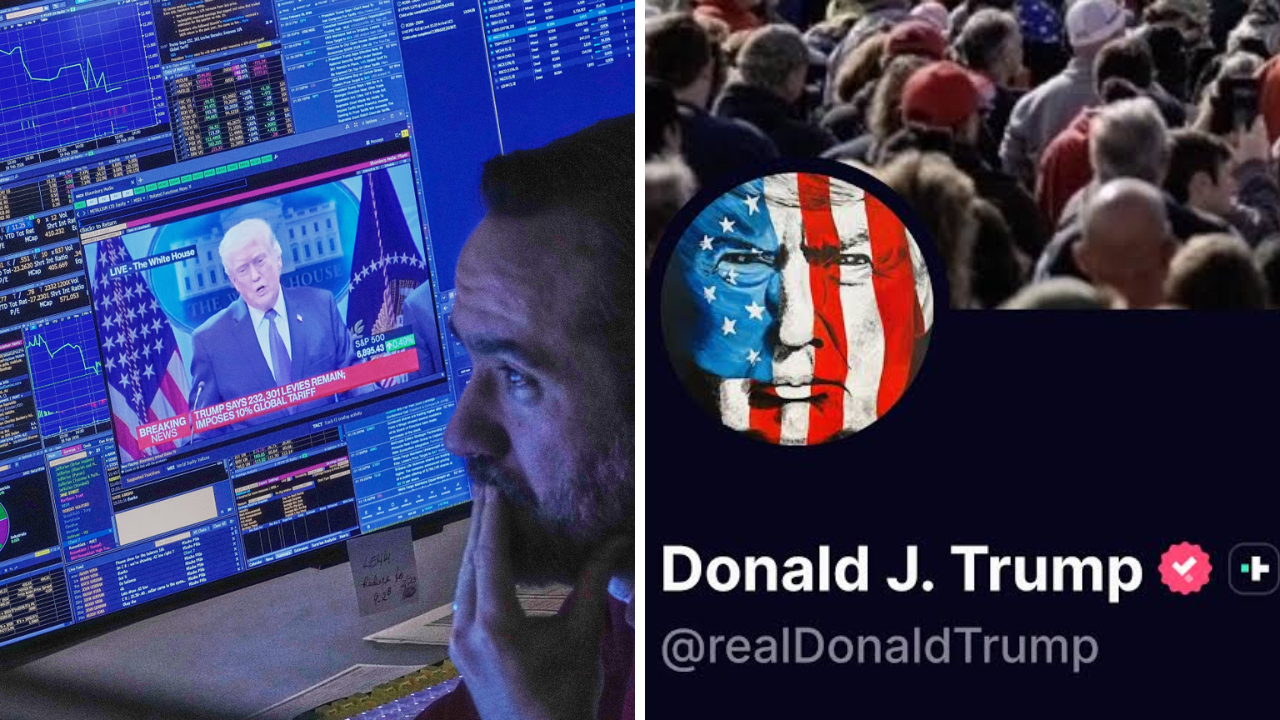
Wall Street firms are said to be paying up to $100,000 a month for services that give them fast access to public statements and social media posts from President Donald Trump. In today’s financial markets, a few seconds can mean a lot, especially when presidential comments could move stock prices, bond yields, commodities and currency markets.
The Trump posts market data business has expanded as financial institutions have come to depend on ultra-fast news delivery systems to help traders react before market-moving information is widely reflected in asset prices. These services do not provide access to private information, but are instead focused on disseminating public posts with the lowest possible latency.
Why Trump’s Posts Matter to Financial Markets
Comments from President Trump can instantly affect investor sentiment. Financial markets often see rapid movements in response to statements about tariffs, trade negotiations, taxes, interest rates, government policy, or major companies.
Pros watch these releases like hawks. Because often the markets react within seconds. A single post about international trade or economic policy can almost immediately move equities, government bonds, currencies and commodities.
For billion-dollar investment firms, a few extra ticks of speed over your competition can make a world of difference in your trading results.
Speed as a Valuable Commodity
Technology is driving the modern financial markets. Trading firms spend a lot on high speed internet connections, high tech data centres, algorithmic trading systems and real time news feeds.
Services that offer quick delivery of Trump’s public posts fit into this ecosystem. Instead of waiting for websites or social media platforms to refresh, subscribers can receive structured data almost immediately after a post goes live.
The advantage is milliseconds not minutes. The information is public , but the faster access lets automated trading systems process the information and react before the rest of the market has had a chance to react .
Artificial Intelligence is Playing a Larger Role
A lot of companies are blending these fast warnings with artificial intelligence. Within seconds natural language processing systems can analyse the tone of a post, identify the key policy topics, and estimate the potential market impact.
Algorithms can be used by some industries, such as banking, manufacturing, energy, defence or technology, to tell if a message is positive or negative.
While human traders often review these automated assessments before making larger investment decisions, AI has become a valuable tool for sorting through information at high speed.
The Business of Premium Data Services
For years financial information providers have been charging a premium for the privilege of receiving market moving information faster. Institutional traders have tracked real-time economic data, corporate earnings releases and financial news services for decades.
The fees noted reflect the value that some investment firms assign to receiving public information with minimal lag. For large volume trading firms, avoiding small delays may help in improving execution quality or reducing market risk.
These services are generally more focused on speed, reliability and structured data delivery than on offering unique or confidential information.
Regulators Keep an Eye on Fair Market Practices
These services are not insider trading, which involves material non-public information, because the information involved is public statements . Regulators, however, continue to monitor market practices to ensure fair and transparent trading.
But regardless of how fast financial firms get information from the public, they are still bound by securities laws, market regulations and exchange rules.
Regulators may take a closer look at the impact of artificial intelligence, algorithmic trading and ultra-low-latency data services on overall market stability as technology evolves.
Competition for information is unlikely to go away
The race for speed of information is a hallmark of modern financial markets. Political announcements, economic policy and government decisions continue to influence investor behaviour and demand for real-time data services is expected to remain strong.
Investment firms are likely to continue to invest in technologies that allow them to process public information faster than ever, whether it’s monitoring presidential statements, central bank announcements or major economic releases.
Sources
- Reuters – Financial firms are also paying for quick access to President Trump’s public posts. Market reactions and institutional trading practices.
- Bloomberg – Wall Street trading technology, algorithmic investing, financial data services, market infrastructure coverage.
- The Wall Street Journal – An analysis of institutional trading, political changes impacting markets and the growing business of premium financial information.
- U.S. Securities and Exchange Commission (SEC) – Securities regulation, fair market practices, insider trading rules and market transparency.
- Financial Times – Global financial markets, trading technology, investment strategies and the business value of real-time market data.