

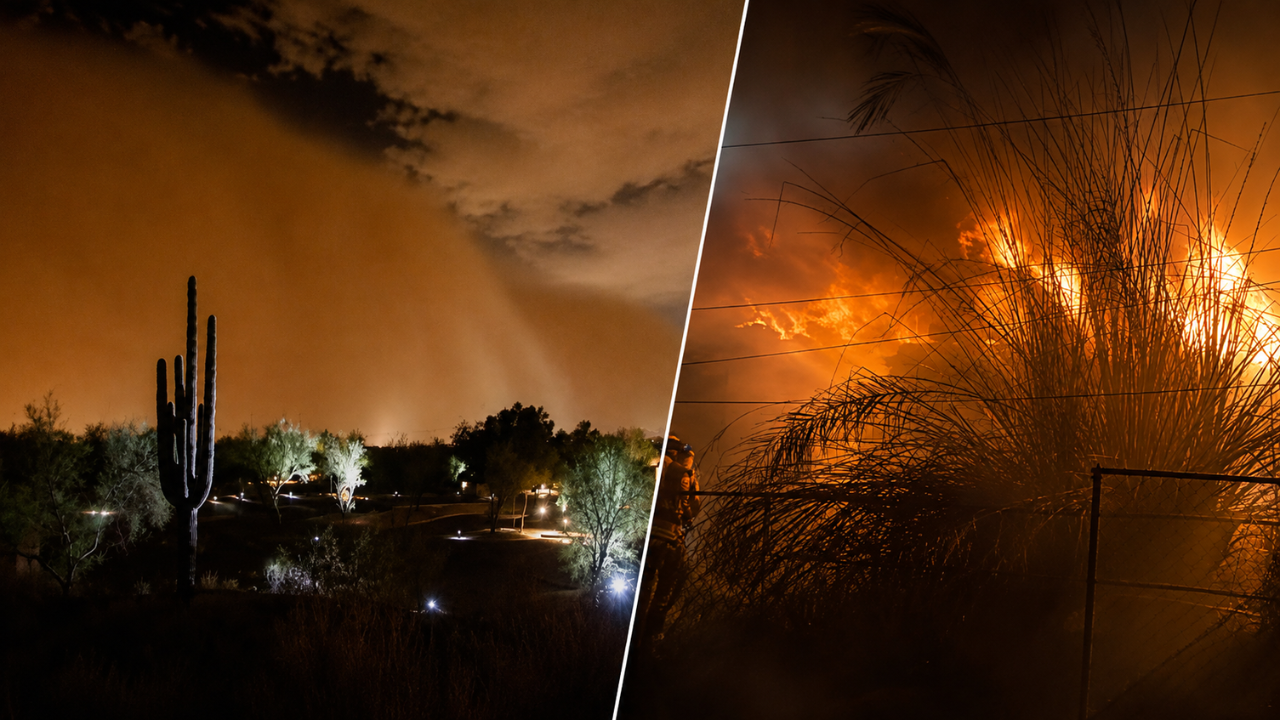
A dust storm moved through the Phoenix Valley today, bringing hazy skies and reduced visibility to much of the area, reports said. The storm brought strong winds, dust and difficult driving conditions, a reminder of the dangers that Arizona’s seasonal dust storms can bring to communities.
The loss of visibility reported in the Phoenix dust storm is an example of the problems that ongoing haboobs and high wind events cause in the desert South-west. These storms can develop quickly and create dangerous conditions for drivers, outdoor workers and those with respiratory problems.
Valley Covered With Dust Clouds
Dust storms are created when strong winds blow loose soil and sand from dry desert surfaces into the air.
The dust can turn the skies orange, brown or grey and can drastically reduce visibility as it moves through populated areas. It’s particularly vulnerable in the Phoenix metro area, where the desert environment and surrounding mountain ranges intersect with stretches of dry weather.
Residents may experience sudden changes in the conditions of the air and outdoors when a dust wall is on its way.
Hazardous Driving Conditions
One of the greatest dangers in a dust storm is the loss of visibility.
Drivers might find it difficult to see road signs, traffic lights, other vehicles and road markings. Officials say they recommend slowing down, turning on headlights and avoiding sudden lane changes.
In poor conditions drivers may need to stop safely and wait for better visibility. Parking in active traffic lanes also presents other hazards.
Health concerns from dust events
Blowing dust affects air quality and can cause problems for sensitive groups.
Fine particles can be a problem for people with asthma and allergies, lung conditions and other breathing problems. The elderly, outdoor workers and children are the most vulnerable.
When dust levels are high, health officials often advise people to stay indoors and use indoor air filtration, if possible.
Monsoon Season Brings Dust Storms
Phoenix dust storms are common in the Arizona monsoon season.
Thunderstorms at this time can produce strong wind gusts that can travel a good distance away from the origin of the storm. These winds can move large quantities of desert dust creating walls of debris that move quickly.
Awareness and preparation are important because storms can develop fast.
National Weather Service Provides Safety Tips
The National Weather Service tracks the dust conditions and issues alerts when visibility gets to dangerous levels.
Weather officials use radar, satellite data, wind readings, and local reports to track developing storms. The alerts give residents the chance to plan and make safer choices.
The report urged people to heed official forecasts instead of reports on social media as conditions changed rapidly.
Transport and infrastructure impact
Dust storms have hit the Valley hard, disrupting daily life.
Delays, or temporary delays, could occur at airports, highways, outdoor events and construction areas. When the wind picks up, crews are often forced to secure equipment and protect workers.
High winds may also impact utility services if the infrastructure is compromised or dangerous.
Sources
- National Weather Service Phoenix office – Dust storm forecasts, weather warnings, safety information
- Arizona Department of Transportation – Travel, road conditions, and safety information.
- Arizona Department of Environmental Quality – Air quality monitoring and pollutant information
- Maricopa County Air Quality Department – Local dust monitoring/health advisory.
- NOAA – Weather research, climate data, and forecasting tools
- The Associated Press – Reliable local weather news, emergency alerts.